13 January 2011
Become a Certified Royal Expert


Death to the Queen: One Night at the Palacio Real
 |
Victoria Eugenie and Alfonso XIII via Wikimedia Commons |
For the death knell was sounding not in this sick chamber, but outside the Palacio Real, where surging crowds were yelling, “Viva la republica!” and “Death to the Queen.” As Queen Victoria Eugenie looked at her children, she could at least thank God that her other hemophilic son, 17-year-old Infante Gonzalo was not also ill. The family’s escape into exile was already hampered by the illness of the 24-year-old Prince of the Asturias. Indeed, King Alfonso XIII had been forced to leave his family behind, reassured that they would leave by train the following day.
But, what a long night awaited them.
Just weeks before, the queen, known as Ena in the family, had returned from a visit to her ailing English mother, Princess Beatrice, youngest daughter of Queen Victoria, to be greeted by rapturous crowds chanting “Long live the queen!” Knowing the tumultuous state of Spain’s government, she at first thought they were cheering against her. She was almost certainly pleased when the throngs of people caused her car to have to travel very slowly to the Palacio Real and their cheers led the royal family to make an impromptu balcony appearance.
For decades, the Spanish throne had been on rocky ground, saved only by successive dictatorships that at least kept the hounds of republicanism at bay. Even that stability was illusive. By late 1930, King Alfonso felt forced to ask for the resignation of the most recent “director” General Primo de Rivera. As the next spring approached, elections were set and the outcome was unpredictable. On April 17, the monarchists won an overwhelming victory—22,000 to 6,000—but only in the countryside. The cities were dominated by the republicans who seized the moment to make their own history. A civil war was imminent.
Alfonso refused to abdicate but he hoped civil war could be avoided if he and his family left the country for a while. It was a strategy that appeared to have worked in the past for their Greek cousins. As he slipped away to Marseilles, his wife and children gathered for a solemn dinner around Alfonsito’s sickbed. Only 18-year-old Infante Juan was absent, away at military school from which he would have to make his own way to safety. But, at least Juan was healthy, unlike his three brothers. Juan had not only escaped the hemophilia that plagued his oldest and youngest brothers but also the deafness of the second son Jaime, who had been rendered deaf by a botched medical procedure when he was only four.
 |
| Victoria Eugenie with her first three children: Alfonso, Jaime and Beatriz By Christian Franzen in the National Portrait Gallery via Wikimedia Commons |
When morning finally arrived, Ena and her children attended one last mass together at the Palacio Real and then bade goodbye to their servants. With Alfonsito carefully carried on a stretcher, the royal family departed, not knowing when or if they would ever return. Their journey was slow and emotionally exhausting. Newspapers reported that the 43-year-old queen appeared anxious and fatigued. Along the way, they stopped at El Escorial, which houses the crypt of Spanish monarchs. Ena had never liked this morbid place, but she had to have wondered if this would be her last visit, would she be forced to find some other final resting place? Hounded by peasants at one way station, where she found only a rock to rest upon, her demeanor remained calm and dignified. “Viva la republica,” one woman called out to her. “Long live whatever is best for my people,” the queen replied quietly.
In exile, King Alfonso XIII and Ena gave up the pretense of their marriage and separated. He had married the young British princess for her beauty and gentleness, but he never forgave her for the genetic disorder she passed on to their sons. Their very wedding day was filled with portents of the unhappiness that awaited their life together: a would-be assassin’s bomb left soldiers and horses mangled all around the bridal carriage.
The civil war they had sought to avoid ravaged Spain from 1936 to 1939, finally ending with the strong-arm dictatorship of General Francisco Franco. The dictator-for-life declared Spain a monarchy again in 1947, although he named no king. In the 1960s, he invited Alfonso and Ena’s grandson, Juan Carlos to live with his young Greek bride and their children in Spain. In 1969, Franco designated him as his heir. Upon Franco’s death in 1975, he became absolute king of Spain, but contrary to his predecessor’s plans, Juan Carlos transitioned Spain into a democracy with himself as a constitutional monarch.
Queen Ena also returned to Spain, although briefly, for the christening of her great-grandson Felipe in 1968—he is the current Prince of the Asturias. (UPDATE: Felipe became King in 2014 when Juan Carlos abdicated.) Ena died a year later in Lausanne. She returned at last to El Escorial in 1985, where her remains were placed next to her husband, who had been transferred their five years earlier, nearly 40 years after his death in exile.
04 January 2011
A Tragic Royal Birth
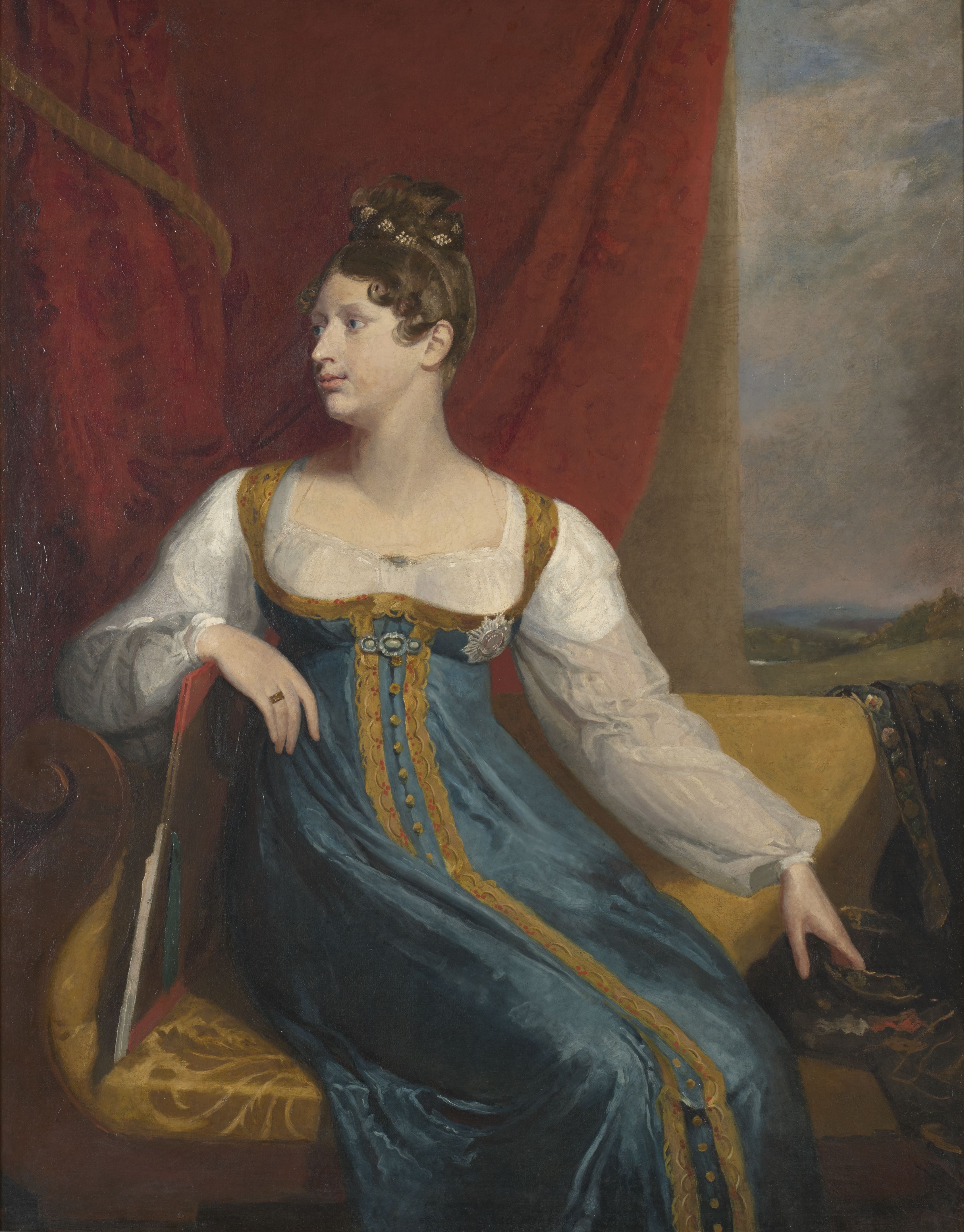
Sir Richard, however, could not forgive himself. Months later, as he oversaw another difficult delivery, he adjourned to another room in the lady's house and committed suicide.
The deaths of Charlotte and her son marked a true crisis for the royal family. They were the only heirs to the throne and Charlotte had been the only publicly loved figure in a royal family marred by scandal and "madness." As the florists sold out of flowers with the death of Princess Diana in 1997, the shops sold out of black mourning cloth in 1817. Her first biographer even announced that historians of the future would focus on Charlotte's tragic death more than any other events of the day--which included, by the way, the recently concluded Napoleanic wars!
Within two years, George III had several new grandchildren thanks to a rush to the altar by Charlotte's uncles and her public memory was rather quickly forgotten as the nation focused its hopes on a little princess named Victoria, whose memory would be preserved in hundreds of place names and even the naming of an era of history.
This week, the Cross of Laeken blog celebrates its second anniversary by publishing a guest post from me about the life of Princess Charlotte. The connection between a blog about the Belgian royal family and a British princess may not be immediately clear. Charlotte's husband, who would have been Albert to her Victoria, remained a widower in England for more than decade. Then, he was offered the newly create Belgian throne as King Leopold I. He remarried and named his only daughter for his beloved Charlotte. But, even this remembrance is laced with darkness for she grew up to be the mad Empress Carlota of Mexico.
Click here to read the Cross of Laeken post. Congratulations on your second anniversary! Thank you for inviting me to be a part of your excellent blog!
Subscribe to:
Posts (Atom)