07 January 2024

The Last Queen, for Now

Queen Margrethe of Denmark looks off to the upper right, wearing a pearl parure of tiara, necklance, earrings, and brooch, the sash of the order of the elephant, and two family orders.
Queen Margrethe II of Denmark
Copyright Kongehuset | Photo by Per Morten Abrahamsen
On New Year's Eve, Queen Margrethe II of Denmark stunned her nation and the world by announcing that she will abdicate the throne on January 14, 2024. The date will mark the 52nd anniversary of her own accession upon the death of her father King Frederik IX in 1972. Unlike some other monarchies, Denmark does not have a tradition of retiring or abdicating monarchs, making her decision unprecedented in her country.

For this blog, the more momentous historical fact about Margrethe's abdication is that it will leave Europe without a single Queen Regnant or Reigning Queen.  (See my post Abdicating Queens about other women who have left their thrones.)

[For those who counter that there will still be Queens in Europe (Silvia, Sonja, Maxima, Mathilde, Letizia, and Camilla), this is technically correct. However, these women are all Queens Consort. They hold the title only because their husband is King. If a Queen Consort dies, the King remains on the throne. In the case of a Queen Regnant, she herself is the monarch regardless of her marital state. In recent centuries, her husband, if she has one, is a Prince not a King so as not to technically outrank her. If the Queen Regnant dies, the throne passes to her heir. In this case, the throne will pass to Queen Margrethe's oldest son, who will become King Frederik X. His Australian-born wife Mary will become the seventh of Europe's current Queens Consort.]

Historically, reigning women have been rare animals. In all monarchies, traditions and laws have generally prevented women from inheriting thrones until very recently. Some countries, barred women and their offspring from being in the line of succession at all. Some allowed her male offspring, but not the woman herself. Some allowed a woman but only if she had no other living male relatives. Others allowed a woman if she were the only surviving daughter of a monarch who had no living sons. In fact, Margrethe herself was not heir to the throne of Denmark until the laws were changed to allow female succession when she was 12 years old. Until then, her father's younger brother Prince Knud was his heir.

A female monarch is unusual. Over the last thousand years, only 83 women have reigned (or ruled in earlier days) as monarchs in Europe. By comparison more men have reigned/ruled just on the island of Great Britain over the same period. Some nations, including France and Prussia, never had a Queen Regnant at all. Their scarcity is probably why so many of these women stand out in our minds: Bloody Mary, the Virgin Queen, Catherine the Great, Mary Queen of Scots, Isabella of Castile, Empress Maria Theresa, Queen Victoria.

However, since the accession of Empress Anna of Russia in 1730, there has been at least one reigning queen somewhere in Europe. Margrethe's abdication will leave us without a female monarch for the first time in 294 years. On the other hand, thanks to changes in gendered succession laws in nearly every European monarchy in the over the last 50 years, we have an unprecedented number of female direct heirs. The next monarchs in Belgium, the Netherlands, Spain, and Sweden will all be women. In Sweden, the next two monarchs will be women. Under previous succession laws, only one of these women would be a direct heir today: Spain's Princess Leonor. In fact, Leonor actually is the heir under the "old laws". Spain has not changed its laws to be gender neutral. It was briefly debated during Leonor's infancy, but once it was clear that her parents would not have son, the conversation was tabled indefinitely. 

TAMAR TO ADELASIA: The Crusader Period

Queen Tamar of Georgia
via Wikimedia Commons
This is the last of four extended periods of multiple overlapping female monarchs. The first, which lasted about 75 years, started with the accession of Tamar the Great in Georgia in 1184. For 14 years before that she had served as co-ruler with her father. During this period there were 11 women on thrones. Several of these were the leaders of Crusader Kingdoms set up in the Holy Lands or along the Crusader routes. Some of them were more or less trophy wives for ambitious younger sons seeking fortune and power in an age when anything a woman had, including her kingdom, legally belonged to her husband. Four of the 11 ladies were Queens of Jerusalem. This period ended with the death of Adelasia of Torres, who succeeded her brother over the Judgeship/Kingship of Logudoro in Sardinia. When her brother died without heirs, the leaders in Logudoro chose between Adelasia and her younger sister Benedetta. Ultimately, they picked Adelasia because her powerful husband, who ruled the neighboring Gallura, could defend her kingdom and her claim. When that husband died, she made a couple more strategic marriages, with her and her third husband being declared King and Queen of a new Kingdom of Sardinia. After Husband #3 was taken prisoner on the Italian peninsula, she carried on alone. Despite all of these marriages, she had no surviving children and the Kingdom was broken up after her death in 1259.

CONSTANCE II TO MARGRETHE I: The Medieval Period

Effigy of Queen Margrethe I of
Denmark, Sweden & Norway
Photo by Jacob Truedson Demitz assisted by Emil Eikner
for Ristesson via Wikimedia Commons
The second stretch of simultaneous queens started with the accession of Constance II in Sicily in 1282 and lasted 130 years. Coincidentally, it ended with the death of Margrethe I of Denmark, the only other woman to rule there. The first Margrethe created the Kalmar Union, which united Denmark, Sweden, Norway, Iceland, Greenland, Finland, and even some of the islands that today are part of Scotland under her. The laws preventing female accession were created later. In this period, military might and political power underlaid the sovereign's regnal claims. Margarethe was a Danish princess. At age six, she was engaged to marry Haakon VI, who was King of both Sweden and Norway. He was 18. After some political turmoil and other tragedies, they were finally married four years later. These child marriages and wide age ranges were common at the time. At age 17, she gave birth to their son Olaf, who became King of Denmark upon her father's death five years later. Olaf then became King of Norway before the age of 10 when Margrethe's husband died. Margrethe ruled through the young Olaf until his own mysterious death at age 16. Even today, some think Margrethe had him poisoned. Others believe that a pretender, "False Olaf," who emerged years later was the real King. Margrethe, who was busy consolidating her power within the Kalmar Union, had False Olaf executed. (If you watch the film, Queen of the North, you might believe she killed him even knowing he was her son. Don't fall prey to the moviemakers: the real False Olaf didn't even speak Danish.) This queen streak, which included 20 women, ended with Margrethe's death in October 1412.

ISABELLA THE CATHOLIC TO HER GREAT-GREAT GRANDDAUGHTER

Statue at El Palacio Real in Madrid 
of Queen Isabella I of Castile
Photo by Peter Schmidl via Wikimedia Commons
The third stretch of overlapping queenships began with the accession of Queen Isabella of Castile and Leon in 1474. She succeeded her older half-brother over his own daughter as part of a truce between warring camps in Castile. She married the heir of the neighboring Kingdom of Aragon. Together, Isabella and Ferdinand became known as the Catholic Kings and are most famous in New World as the couple who sponsored Columbus's voyages. In Britain, they may be as well known as the parents of King Henry VIII's very first wife, Catherine of Aragon. This period of powerful queens includes Isabella's daughter Juana, who succeeded her as Queen of Castile, but who was locked away as "La Loca" or "the crazy lady" by her father King Ferdinand and kept in gentile imprisonment by her own son. It also includes Isabella's granddaughter by Catherine, Queen Mary I of England, who is remembered by history as Bloody Mary for her execution of Protestants. Mary's half sister, the Protestant Queen Elizabeth I and their paternal cousin Mary Queen of Scots also ruled in this era. There are three Queens of Navarre in this period, too. The most famous of these may be Jeanne d'Albret, who was a thorn in the side of the French Queen Regent Catherine de Medici. (A Queen Regent is a Queen Consort, usually widowed by her King, who holds power in place of an underage or incapacitated ruler, usually her child.) This period was marked by violent battles between Catholics and the emerging Protestant faiths. In fact, it was rumored that the Catholic Catherine de Medici murdered Protestant Jeanne by sending her poisoned gloves. In England, the very thought of the succession of women to the throne itself proved pretty bloody, too. (See my post Killing Queens: A Bloody Tudor Heritage.) Despite this, in England's Tudor Dynasty, women ruled for 50 years, or nearly half of the dynasty's existence.

The woman who ruled last in this period of queens was another descendant of the woman who started it. Isabella Clara Eugenia was Isabella of Castile's great-great granddaughter. She was the first surviving daughter of King Philip II of Spain, whose Habsburg dynasty ruled over great swaths of Europe from Spain across the Netherlands to Austria and beyond. She often acted as an assistant and later as caretaker to her father. At different times in her life, she was suggested as a possible Queen Regnant in France after the Valois dynasty died out and as a successor to England's childless Elizabeth I because Isabella Clara Eugenia was also a descendant of the Lancastrian line of the English royal family. Although neither of these thrones came to her, King Philip decided to divide his vast territories and make her Sovereign of the Spanish Netherlands jointly with her husband-cousin Albert VII, Archduke of Austria. After Albert's death in 1621, she became a Franciscan nun but she continued as Governor of the Netherlands until her own death in 1633. In addition to bringing peace to the region, she is well remembered as a patron of artists, including Rubens and Brueghel the Younger.

THE MODERN QUEENS: 1730 TO 2024

Empress Anna of Russia
from the collection of The Hermitage, St. Petersburg
via Wikimedia Commons
For most of the 18th Century, the Russian Empire was ruled by women. The first male Tsar of the 19th Century changed the rules to ban women leaders, but that's a story for another day. The second of these women, Empress Anna, came to power in 1730 starting the current line of concurrent queens that will end this year with Queen Margrethe II's abdication. Anna was the niece of Peter the Great. Long before her accession in Russia, Uncle Peter married her to the Duke of Courland, who died on the honeymoon journey from Russia to Courland. The 17-year-old bride managed to attain and retain power for 20 years. This experience earned her the Russian crown over her sisters and female cousin when the male Romanovs died out. She was selected by a Supreme Privy Council who asked her to sign "Conditions" limiting her authority. Once she reached Russia and assumed power, it was not long before she disbanded that council, ignored the Conditions, and re-established the Tsarist Autocracy. Although capricious and cruel, she continued the westernization and other modernizations started by Uncle Peter. Anna never remarried and left the throne to her great-nephew, an infant who was soon overthrown and imprisoned by Anna's cousin Elizabeth.

This nearly 300 year stretch of female monarchs includes such well-known and long-reigning women as Catherine the Great in Russia and Empress Maria Theresa in Austria. It also includes two Marias in Portugal and another Isabella in Spain. All together 18 women fill this period, including Napoleon's second wife, Marie Louise of Austria, who was made reigning Duchess of Parma after Napoleon's defeat and exile. In the United Kingdom, this period includes the two longest reigning British monarchs, Queen Victoria (reigned 1837-1901) and her great-great granddaughter Queen Elizabeth II (reigned 1952-2022). These two ladies led the British Empire, later Commonwealth, for a combined 133 years. 

One of the most remarkable groups of women during this period are the Queens of the Netherlands. They represent only the second time in history when three women in a row succeeded each other (see my post End of the Queen Streak.) The first had been the brief and disputed reign of Lady Jane Grey, followed by Queen Mary I, and her sister Queen Elizabeth I in 16th Century England (see my post The Original Queen Streak). The Dutch streak started with the accession of 10-year-old Queen Wilhelmina in 1890, whose older half brothers had died leaving her as the only heir to an elderly father. Wilhelmina led her country through World War I and, from exile, through World War II, after which she decided to abdicate in 1948 in favor of her only child, Queen Juliana. Juliana confirmed with Dutch tradition of abdication in 1980, passing the throne to the oldest of her four daughters in 1980. That daughter, Queen Beatrix, voluntarily laid down her crown in 2013 and the Dutch throne went to a man for the first time in 123 years.  

In these last three centuries of continuous queenship, there were some periods where there was only one female monarch at a time. The longest of these periods was during the reign of Queen Victoria, who was the only female monarch after Isabella II was deposed in Spain in 1868 until the accession of the child Queen Wilhelmina in The Netherlands in 1890. 

Interestingly, Victoria's own accession in 1837 made her the fourth woman with a throne in Europe. This was the greatest number of female monarchs at any point in European history. Her co-monarchs in petticoats were Marie Louise in Parma (whose death in 1847 brought this remarkable decade to a close), Maria I in Portugal, and Isabella II in Spain. At 18, Victoria was the newest but not the youngest in the group. Six-year-old Isabella had been on her throne since she was a toddler.

There had also been one brief period in the 18th Century when three women reigned at once. From 1777 to 1780, women monarchs spanned the breadth of Europe with Catherine the Great on the eastern edge in Russia, Maria Theresa in the middle in Austria, and Maria I in the far west in Portugal. 

Embed from Getty Images

The last period of three simultaneous reigning queens is the longest, starting with Queen Margrethe's accession in 1972 and ending with Queen Beatrix's abdication in 2013. Britain's Elizabeth II was on her throne throughout those 41 years, while Beatrix's mother and predecessor held that throne until 1980.While this may seem lot of reigning queens in an era when there are far fewer monarchs, during these last decades, women were only one-third of the monarchs in Europe.

The Next Queens: Five at Once?

The next Reigning Queen?
Crown Princess Victoria of Sweden
Copyright Royal Court of Sweden | Photo by Linda Broström
Once Queen Margrethe relinquishes her duties, it may be several years until there is another reigning Queen in Europe, but it is possible that there will be women on five thrones at once within the next 20-30 years. The one who will likely succeed first is Crown Princess Victoria of Sweden. The succession laws there were changed to include women when she was a toddler, which caused her to jump ahead of her younger brother who had been born as Crown Prince. Her 77-year-old father King Carl XVI Gustav celebrated 50 years on the throne last year. With his cousin Margrethe laying down her scepter just two years after her 50th jubilee, perhaps he will follow the spreading trend of abdication. Otherwise, if he lives into his 90s, it could still be a long time before 46-year-old Victoria is queen. Since her oldest child, 10-year-old Princess Estelle, is a girl, Sweden is currently the only monarchy with two direct heirs who are female. 

In Belgium, the Netherlands, and Spain, the female heirs were all born in the 2000s and their reigning fathers were all born in the 1960s, which makes it extremely likely that these women's own reigns will overlap. All of their dads acceded upon the abdication of their own reigning parents within 14 months of each other 10 years ago. Elisabeth Duchess of Brabant is the first-ever female heir in Belgium. At 22, she is eldest of these three princesses. The Netherlands' Catharina Amalia Princess of Orange just turned 20 in December. Spain's Leonor Princess of Asturias is the youngest at 18. Elisabeth and Amalia are pursuing university studies while Leonor is undertaking military duties, which Elisabeth has also done previously.

In Norway, the heir to the ailing 86-year-old King Harald V is a man, 50-year-old Crown Prince Haakon Magnus. However, after him, his daughter Princess Ingrid Alexandra will inherit the crown. She will celebrate her 20th birthday one week after Queen Margrethe's abdication, making her a contemporary of Elisabeth, Catharina Amalia, and Leonor. In 2024, she is undergoing a year of military training but will likely pursue university studies in the future. 

All of these women seem very comfortable in their public roles. As the younger women emerge more into the public limelight and likely start their own families in the next decade or two, it will be interesting to watch how they develop and which areas of public activity most attracts them. As the author of a blog about princesses, I certainly am looking forward to what the future holds for them!

Embed from Getty Images


30 December 2022

The Lady Formerly Known As Princess


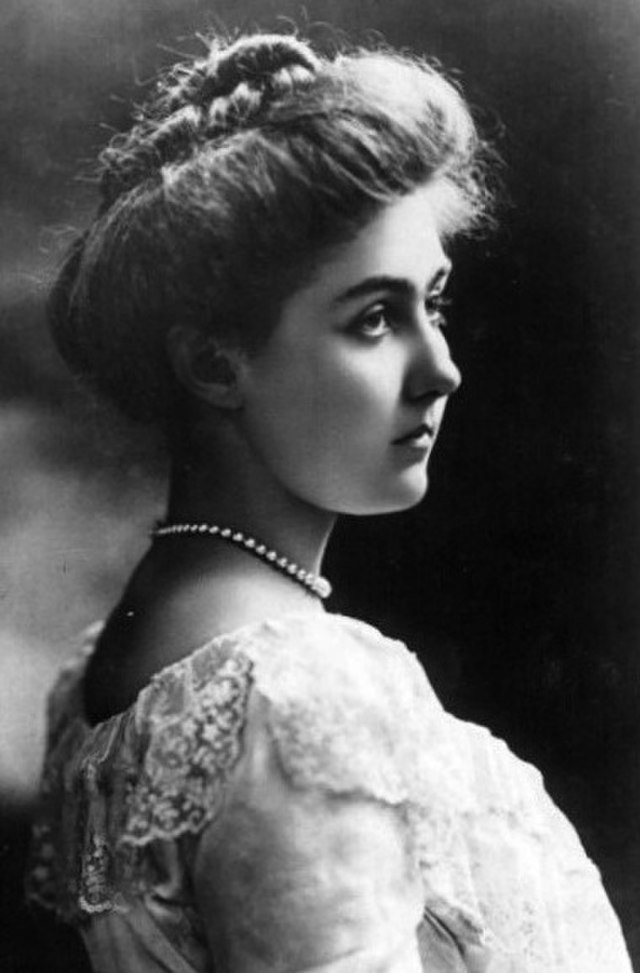
Princess Patricia of Connaught, 1912
Illustrated London News via Wikimedia Commons

"It's not a good idea to give up being a princess." Thirty-plus years of a happy marriage had not made it easier for Lady Patricia Ramsay to forget that she had been born a princess. As she watched her cousin's granddaughter struggle with the decision to surrender her rank in order to marry for love. Patsy, as she was known in the family, spoke to the young Princess Margaret from what she called "bitter experience." (For Margaret's story, see my post, An Affair to Remember.)

Born on St. Patrick's Day in 1886, Princess Victoria Patricia Helena Elizabeth of Connaught was one of the youngest of grandchildren of Queen Victoria and Prince Albert. Her father Prince Arthur Duke of Connaught was the seventh of Victoria's nine children while her mother Princess Louise Margaret was the granddaughter of a Prussian king. While other princesses of her generation tended to marry quite young, Patricia remained a spinster into her 30s. Her older sister Princess Margaret of Connaught made a love match with the imminently suitable Crown Prince Gustav Adolf of Sweden in her early 20s. Within weeks, Margaret was already pregnant with the first of six pregnancies. 

As the niece of Europe's most respected bon vivant, King Edward VII, Patricia was also expected to marry a future king. Her parents traipsed the teenager around Europe. A Portuguese prince? No, thank you. The King of Spain, perhaps? No, he went to her first cousin, Princess Victoria Eugenie of Battenberg. If not a German Grand Duke, how about Tsar Nicholas II of Russia's younger brother? Whether real opportunities or imagined by well-meaning aunties, Patricia passed them all up. Instead, she spent her early adulthood traveling the globe with her parents. She followed her father, an Army officer, to a posting in India and then to Canada when he was appointed Governor General. The lively princess was a popular figure there, often accompanying her father on official duties due to her mother's illness. She criss-crossed Canada traveling thousands of miles during their time there. Her portrait appeared on a one dollar note, she was made Colonel-in-Chief of a light infantry brigade named in her honor, and a lake in the Province of Alberta was named for her. When her mother died in 1916, Patricia inherited a fortune, making her financially independent and perhaps enabling her to follow her own heart. Her mother is said to have given her daughter's romance her blessing on her deathbed.

It is perhaps not surprising that this Army officer's daughter found her true love in the arms of another military officer, Alexander Ramsay, who served as one of her father's aides-de-camp. Ramsay, who rose to the rank of Admiral and was knighted, had been nobly born. His father was the 13th Earl of Dalhousie, but he had no crowns or coronets of his own to offer the Princess when they married in February 1919, barely three months after the Great War had ended. She was not the first princess to marry outside of royal house, but she was the first modern princess to do so and her cousin, who had become King George V in 1910, was in a bit of a downsizing mood. At the height of the war, he had Anglicized the entire extended family, changing the royal house to Windsor and requiring aunts, uncles, and cousins galore to surrender any Germanic names and titles. The Battenberg princes became Mountbatten marquesses and the Tecks became Cambridges. Not only was he hoping to tamp down any hints of their Teutonic heritage, he generally wanted to present a smaller, easier to manage royal family to the British public, in hopes of hanging on to his throne as other crowns were toppled and his cousins in Russia were slaughtered.

Bain News Service via Wikimedia Commons

So, when Princess Patricia chose to marry "beneath" her, Cousin Georgie approved her decision to surrender her royal rank. While her sister remained Crown Princess Margaret of Sweden, she became merely Lady Patricia Ramsay at the age of 32. Despite this downgrade, Patricia kept her rank above marchionesses and she remained a beloved member of the British Royal Family. She even participated in the procession of Princes at the Coronations of King George VI in 1936 and Queen Elizabeth II in 1952.

The couple had known each other for over a decade and had eyes only for each other for nearly that long. The war and his lowly birth had postponed their nuptials. The two were separated as he served with distinction in the Mediterranean. Ramsay returned to Canada to propose to Patricia in Nova Scotia but they were married in the bosom of the royal family at Westminster Abbey in London. Theirs was the first royal wedding to be held there since the 14th Century, but it was certainly not the last. Much like the future Queen Elizabeth II's wedding at the Abbey in the dark days after World War II, Patricia's wedding was a welcome bright spot for the war-weary populace.

Patricia was beloved by the public at home and especially in Canada. Like many of her relatives, including the current King Charles III, she was a talented artist as well as an athlete. She was known to enjoy riding, field hockey, golf, and ice skating. After her marriage, she withdrew from royal duties, with one major exception: she remained Colonel-in-Chief of Princess Patricia's Canadian Light Infantry, visiting with them and keeping track of them over the decades until her death in 1974, just 14 months after her husband's passing.

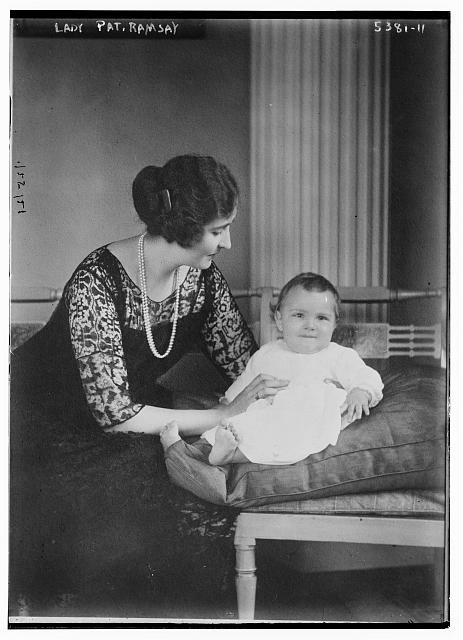
Lady Patricia and her son,
Alexander Ramsay of Mar
Bain News Service via Wikimedia Commons

Ramsay had continued his naval career after the wedding, commanding one of the early aircraft carriers and eventually commanding all of the carriers in the fleet in the 1920s. In the 1930s, he served as Commander-in-Chief of the East Indies Station and then Fifth Sea Lord and Chief of Naval Air Services. He finally retired in 1942 at the age of 61.

While her more royal illustrious cousins were removed from their thrones in Greece, Germany, Romania, Yugoslavia, and Spain, the Ramsays lived a relatively quiet life in Surrey with their only child Alexander Ramsay of Mar, whose wife Flora Fraser, the 21st Lady Saltoun remains close to the British royals today. As beloved members of the extended royal family, Patricia and her husband are buried in the Royal Burial Grounds at Frogmore in Windsor. 


More about Princess Patricia, Lady Ramsay:
In a Princess, Out a Lady on Royal Musings
Princess Patricia of Connaught on Royal Musings
Princess Patricia of Connaught on Westminster Abbey
Princess Patricia of Connaught, Lady Patricia Ramsay on Unofficial Royalty
Princess Patricia: The first modern royal princess on Maclean's
Princess Patricia: A royal trendsetter on Write Royalty

11 September 2022

Who's Royal and Who's Not

 Across Europe, the "rules" for being royal vary widely. In most of the monarchies, there are clearly documented and followed laws and/or guidelines that define who has royal status as well as who is in the Line of Succession. You might be surprised to learn, however, that the most well-known and well-recognized monarchy is actually the one with the most confusing, broadest, and least well-followed. If you haven't been paying attention in the last few years, I'll give you a hint about which monarchy seems to be "winging" it from moment to moment: it's abbreviation is U.K. In the last 23 years, the British Royal Family has been adapting its own well-established guidelines on what, to some, seems to be a rather case-by-case basis. Before we get into the whys and wherefores of how this is actually a long-term strategic plan on the part of the brand new King Charles III, looks take a quick look at how it works in the other Kingdoms.

King Philippe and the next monarch
Elisabeth Duchess of Brabant
Photo by Michel Gronemberger,
Royal Palace, Brussels
BELGIUM
The most recently formed European monarchy, the Kingdom of the Belgians was formed in 1831 and implemented agnatic primogeniture succession plan. This meant that only males and only male-line descendants of King Leopold I could become King. Historically, this has been a fairly small dynasty, but it always managed to have such an heir even if he had to skip from uncle to nephew or brother to brother. This was finally changed in 1991 when cognatic primogeniture was introduced, allowing women to be eligible and for the line of succession to follow birth order. Eligibility was applied to living dynasts, but the order of succession was not retroactive. In practice, this meant that only the legitimate descendants of King Albert II are in the line. His illegitimate daughter Delphine is barred by being born out of wedlock even though the courts granted her and her children royal status in 2021. The children of King Leopold III by his second wife, a morganatic marriage, (my post about that marriage) are also barred from accession. Likewise the grandchildren in this line do not have royal status. Interestingly, Belgium is the only European monarchy that has an interregnum between monarchs. The new monarch does not accede until taking an oath before Parliament. In the other monarchies, accession happens immediately upon the death or abdication of the previous monarch. Royal titles are granted to all children and grandchildren of a monarch regardless of the gender of the child or the parent.

Queen Margrethe II of Denmark (center)
with her sisters, Queen Anne Marie
of Greece (left) and Princess Benedikte

Photo by Keld Navntoft, Kongehuset

DENMARK
In Denmark, the oldest monarchy in Europe at 1,000 years, women were previously banned from the succession until a 1953 referendum followed by a constitutional amendment gave women succession rights, although with preference for sons over daughters. It also limited the line of succession to descendants of King Christian X, effectively removing all the Greek royals, although they continue still use the titles of Prince or Princess of Greece AND Denmark, because a Danish prince had been created King of Greece in the 19th Century. (The former Greek king, however, is married to a Danish princess, so their children are nieces and nephews of the current monarch and included in royal events in Denmark. Since the Greek king's sister married a Spanish king, his kids are also first cousins of the current Spanish monarch.) In 1953, Danish King Frederik IX was the father of three daughters. The eldest, today's Queen Margrethe II, was 13 when she became the heir instead of her uncle Prince Knud. Gender-blind accession was introduced in 2009. Children of the monarch and the heir are royal highnesses. The children of the Queen's younger son have princely titles but are just Highnesses. The official members of the royal family are children of the monarch or male-line grandchildren. Therefore, Margrethe's sisters are members, but their children are not. Likewise, Uncle Knud's daughter, Princess Elisabeth, remained an official dynast until her death in 2018. Unlike in many of the other monarchies, none of the dynasts have been granted dukedoms or principalities.

King Willem Alexander and the next
monarch Amalia Princess of Orange

Photo by RVD - Martijn Beekman

THE NETHERLANDS

In the last 125 years, The Netherlands may have introduced the most changes to it succession rules and royal family definitions, mostly by necessity. When King Willem III's adult sons died with issue, there was a crisis as he only had left an infant daughter and girls were strictly banned. So they changed it to allow girls if there were no eligible male heirs. Thus, Wilhelmina became Queen as a child. She had an only child, another girl. Then her daughter had all daughters. Finally, Queen Beatrix had a trio of sons. (Here's my post about the Queen streak in the Netherlands.) Then, changing societal norms led the Dutch to adopt absolute primogeniture in 1983. Of course, Beatrix's oldest son, the current King Willem Alexander has a trio of daughters so no gender differentiation would have happened any way. One of the most interesting things about the Dutch monarchy is that it has severely limited who is in the Line of Succession to a very small list of people based on the proximity of blood kinship to the current monarch. Since they also have a well-established tradition of abdication, that means some people get dropped from the list every few decades. The proximity limits succession to the current monarch's children, grandchildren, siblings, nieces/nephews, and aunts/uncles. Cousins of the monarch are not included. Currently, there are only eight people in the line. His nieces by his late brother Prince Friso are not included because Floris and his wife did not receive official permission to marry. Royal titles have also changed. The grandchildren of Queen Juliana were all granted princely titles (if the parents received permission to marry) but the grandchildren of Queen Beatrix who were not in the direct line are styled as Count or Countess. It will be interesting to see what happens when King Willem Alexander's daughters start families, but that may be awhile since oldest is currently 18.


King Harald and the next two monarchs
Crown Prince Haakon and
Princess Ingrid Alexandra

Photo by  Kimm Saatvedt, Det kongelige hoff

NORWAY

Since the modern Norwegian monarchy was launched in 1905, it has the smallest royal family. For the first 24 years, it included only three people: King Haakon VII,  Queen Maud, and their only child Crown Prince Olav. Olav added a son and two daughters, but female-line grandchildren receive no titles and are not considered members of the royal family. So, when Olav died, the family had only grown to six people: Olav's three children, his daughter-in-law, and his son's two children. Agnatic primogeniture meant that female descendants were not in the line of succession. In 1971, male-preference cognatic primogeniture was adopted allowing women to accede if they had no brothers. This meant that the first child of King Harald, Princess Martha Louise, falls behind her little brother, Crown Prince Haakon. Agnatic primogeniture was adopted in 1990 but was not retroactive meaning that Haakon stays ahead of his big sister, but his first-born child Princess Ingrid Alexandra is ahead of her little brother. More recently, Norway further restricted royal status to only the heir and spouse and the heir's firstborn are styled as Royal Highnesses. The children of a monarch and the heir have princely titles, but they are styled simply has Highness. This change was retroactive impacting the current King's sister and daughter. So, Norway is now specifically planning for a very small royal family into the future. 

King Felipe & Queen Letizia
photo by Estela de Castro

SPAIN

Spain is now the only European kingdom that continues to use male-preference cognatic primogeniture. When the current King Felipe V's first child was a girl, there was some talk about changing the law to allow her accede even if she had a brother, but there was not a lot of political will behind it. When Felipe only had one other child, another girl, the discussion faded away. (Felipe himself has two older sisters.) Spain is an ancient kingdom with different extant claimants to the throne. However, after the monarchy was restored in 1975 after the dictatorship of General Franco, the legal line of succession was limited to the descendants of King Juan Carlos: so Felipe, his two sisters, and their offspring. Despite the male-preference succession, Juan Carlos granted dukedoms to his daughters and, by extension, their husbands. Early in his reign, King Felipe stripped his sister Infanta Cristina of her title as Duchess of Palma de Mallorca because she and her husband were under investigation for fraud, for which her husband later served prison time. His oldest daughter bares the heir's title as Princess of Asturias, which has been granted to the heir regardless of gender since the 1400s. However, many Princesses of the Asturias were stripped of the title upon the birth of little brothers, sometimes getting it back when the brother died young. (Here's my post about Princesses of Asturias.)

King Carl XVI Gustav and the next two
heirs Crown Princess Victoria and
Princess Estelle

Photo by Thron Ullberg/The Royal Court of Sweden

SWEDEN

In the late 19th and throughout most of the 20th Centuries, Sweden came close to ending its royal dynasty because of the strict succession rules put in place when the dynasty was established by Napoleon with his friend, Charles Jean Bernadotte as the new king. As in Norway a century later, the royal family consisted only of a King, Queen, and Crown Prince for many years. Over the decades, the family grew, but the dynasty was limited to male descendants. This created a few collateral branches of the family, but the branches sprouted mostly girls, bringing these royal lines to an end. The strict equal marriage rules also caused havoc as prince after prince refused to marry princesses and lost the right of accession for both themselves and any descendants. By 1973, when King Gustav VI Adolf was succeeded by his grandson, current King Carl XVI Gustav, there was only one person in line for the throne. His uncle Prince Bertil, who only remained eligible as a "spare" to the young king by denying himself marriage to his longtime girlfriend. The old king had also prevented the new king from marrying his lady love, another commoner. So, early in his reign Carl Gustav changed the dynastic rules. Soon both the new king and his aging Uncle Bertil were newlyweds. (Read about their wives in my post Royal Brides of Sweden.) Carl Gustav and his Queen Silvia had a daughter and then a son. When the government decided in 1980 to introduce not just female succession but to not implement male-preference, the King tried to get them to let his infant son maintain his position as Crown Prince, as would later happen in Norway. The Swedes, however, overruled him and the firstborn Victoria became Crown Princess. All of the King's children and grandchildren have also been given dukedoms and princely titles. His sisters are princesses but their children have no royal titles. Initially, the King made all of his descendants Royal Highnesses. Under pressure, however, to reduce the quickly growing Royal House, he removed the "Royal" style from the grandchildren by his two younger children. This change had no impact on the line of succession which includes all of his descendants but only his descendants as the 1980 changes did not apply to his sisters nor to the descendants to earlier princesses nor of the princes who had previously married commoners.

THE UNITED KINGDOM
[Deep breath] Now, back to the United Kingdom, which has so many layers of rules and traditions and restrictions that I wouldn't be surprised if members of the British Royal Family fully understand them themselves. We'll take a look first at succession, which is governed by Acts of Parliament. Then, we will move on to the question of who is and is not royal, which has preoccupied so much public discourse in recent years.

The "Slimmed Down Monarchy"? The Duchess of Cornwall, Prince of
Wales, Queen, Prince George, Duke of Cambridge, Princess Charlotte,
Duchess of Cambridge, Prince Louis on the palace balcony
during the Queen's Platinum Jubilee in 2022.

UK SUCCESSION

The succession to the British throne is limited by several acts of Parliament. The monarch has no power to change the succession. He cannot remove anyone. He cannot add any one. He cannot skip any one. Over the years, people have asked me if I thought Charles would be the next king. The answer has always been "yes" because that is what the law says. So, for those who thought William should have succeeded Queen Elizabeth or think that either Prince Harry or Prince Andrew should be removed. Even if they wanted to (which I doubt they do), neither The Queen nor King Charles have the ability to do this.

The acts governing succession include:
The Bill of Right 1689 | Scottish Claim of Rights Act 1689
When the Catholic King James II fled the country in 1688, he was determined to have abandoned the throne for both himself and his newborn son. The next three people in line were Mary and Anne, his Protestant daughters by a previous wife, and his late sister's only son Prince William of Orange, who happened to be Mary's husband. Parliament offered the throne to William and Mary as joint monarchs. This legislation limited the succession first to any descendants of Mary and William, then to Anne and her descendants, then to any children William might have by another wife if Mary predeceased him (which she did). As it happened, none of three of them had children who survived childhood, so very soon, there was no one left in the line of succession. Prior to this, the monarchs did select their own successors, usually following agnatic primogeniture. Part of the Wars of the Roses was based on whether the descendants of an older son's daughter should come before the descendants of a younger son's son. The Tudors were particularly noteworthy for shifting around or waiting until the last minute to choose a successor.

Act of Settlement 1701
With no heirs for the widowed William or his sister-in-law Anne who succeeded him, Parliament tried to re-set the succession again. This time, they skipped over even more Catholic descendants of the Stuart and settled the Succession on Princess Sophia of the Palatinate and her descendants. She was a female-line granddaughter of the Stuart King James VI and I, who had succeeded the Tudor Queen Elizabeth I 100 years earlier. In addition to her Protestantism, Sophia, who had married the Elector of Hanover, had several healthy and a few grandchildren to her credit. From this point, all Catholics and anyone who married a Catholic, and anyone who was not in communion with the Church of England (by then firmly Protestant) was barred from the Line of Succession. Succession continued to follow male-preference primogeniture, with all sons and their descendants moving ahead of any daughters and their descendants. The Hanoverians were quite prolific. Three centuries later, Electress Sophia of Hanover has about 6,000 living descendants. There is no official list of everyone but it would take quite a massacre for the person at the end of the line to make it to the throne.

Succession to the Crown Act 2013
In 2013, the UK and the other dominions who share the British monarch as Head of State, at last adopted gender-neutral accession. This was not applied retroactively to women who were already in the line of succession. For instance, Anne Princess Royal did not suddenly jump forward six places ahead of her younger brothers and their children. Princess Charlotte of Wales, born in 2015, is the first royal girl to not be supplanted by the birth of a younger brother. (There is a story that, as a child, Queen Elizabeth II used to pray that her parents would give her a brother so she wouldn't have to be the monarch.)

So, who is in the Line of Succession, today?
Upon the accession of King Charles III, the first seven people in the line are his descendants. First his oldest son William Prince of Wales and his three children in birth order followed by his second son Prince Harry Duke of Sussex and his two children. The next 16 are the other descendants of Queen Elizabeth II. The next six are the additional descendants of King George VI via the late Princess Margaret. Then, there are 33 additional male-line descendants of King George V. In this part of the line, three people are skipped because they are confirmed Catholics but Prince Michael of Kent, whose wife is Catholic, was restored to the line by the Succession to the Crown Act 2013. After that the line moves to the descendants of Mary Princess Royal and Louise Princess Royal before shifting over to the King of Norway. Although other monarchies specifically bar the sovereign of a foreign state, the UK does not. So, if about 100 very specific people die and/or convert to Catholicism, King Harald of Norway could also become King of the United Kingdom, thanks to his British grandmother. The monarch, ex-monarchs, and claimants of Denmark, Sweden, Greece, Romania, Yugoslavia, Germany, and Russia are also in the line. The Spanish royals are descended from Electress Sophia, so they could get in line if they leave the Catholic Church. 

Governing UK Royal Titles

Traditionally, children have derived their titles from their fathers. In the many centuries that monarch's daughters married kings and princes, there was no need for princesses to transmit royal status or titles to their children. The princesses married into another royal house, and their children had titles from that royal family. However, these styles and honors are given or withheld at the pleasure of the monarch. 

This wasn't a particularly big deal until Queen Victoria had a particularly big family. With her plethora of children, grandchildren, and great-grandchildren to marry off, Victoria decided Serene Highnesses and members of the nobility were suitable spouses. The princesses still got to be princesses and initially there weren't any offspring who weren't at least princelings. That is until her granddaughter Princess Louise of Wales married the Earl Fife, a Scottish peer. Victoria gave him a bump in status making him the 1st Duke of Fife but their children were a marquess and two ladies. No problem for Victoria. When she was succeeded by her son King Edward VIII in 1901, he did not like the fact that any of his grandchildren did not have princely titles, so he fixed it by granting Louise, his eldest daughter, the title Princess Royal and making her surviving children HH Princess Alexandra of Fife and HH Princess Louise of Fife. His son and heir King George V had an opposite point of view. He thought the British Royal House, which was under criticism for being too German in the midst of World War I, also had two many princelings and princesses hanging about. So, in addition to changing the name of the royal family to the House of Windsor, he issued the 1917 Letters Patent. He didn't deprive his nieces or any of his cousins of their titles, but he certainly didn't mind if the ladies, like Maud of Fife, relinquished them when they married men who weren't themselves royals. 

1917 Letters Patent
In order to limit the quickly expanding number of British royals, King George V issued Letters Patent (a document issued by a monarch to grant a right) in 1917. This document says that the following people were entitled to royal status (HRH) and princely titles:

  • the children of a monarch
  • the male-line grandchildren of monarch (so not the children of Princesses of the Blood)
  • the oldest son of the oldest son of the Prince of Wales 
Easy, peasy. Crystal clear so everyone could understand. No problem, right? Wait about a century...

1990s Way Ahead Group
In the wake of the fire at Windsor Castle, three divorces among Queen Elizabeth's children, and questions about how to finance the Royal Family and the Monarchy, senior royals and advisers formed the Way Ahead Group to strategize how to modernize for the future. Greatly influenced by the future (now current) king Charles, the issue of titles and royal status quickly came to the forefront. Charles was (and likely still is) in agreement with his great-grandfather that too many royal princes and princesses can create a burden and provide more opportunities for public scrutiny and criticism. For some time, there even seemed to be a question of whether his brother Prince Andrew's daughters would keep their status. They did, but they were also relegated to the awkward position of being non-working royals. In the meantime, Charles' youngest brother Prince Edward, who did not marry until 1999, was satisfied to take on a kind of half-in, half-out status while he and his wife focused primarily on pursuing private careers. At the time of their wedding, three relevant items were announced:
  • Queen Elizabeth created him The Earl of Wessex
  • his children would not be styled according the 1917 Letters Patent as male-line grandchildren of a monarch but as children of an Earl
  • in the fullness of time (basically after the deaths of both of his parents), he would be created The Duke of Edinburgh

No royal duties for Prince Andrew's children and no duties or even royal titles for Prince Edward's offspring. However, no new Letters Patent regarding either situation was ever issued. Hence, many people (including me) have made the case that all four of these grandchildren are entitled to these titles. We even hoped fruitlessly that Edward's oldest child would start using "her" royal title when she turned 18 in 2021. She didn't and we all cried into our tea cups. 

The Slimmed Down Monarchy
All of this ties into the so-called "Slimmed Down Monarchy" apparently favored by the new King. He sees that the entirely sober and sensible system introduced in 1917 has grown too unwieldy with royal grandchildren of King George V still carrying out royal duties today in their 70s and 80s and receiving financial support for those duties while sitting as far away from the throne as #56 in the Line of Succession. Most people don't even know these first cousins of our dearly departed Queen exist. Granting fewer royal titles and styles means in the future, there will be a small number of Royal Highnesses, positioned very near the throne, supporting the monarch. Meanwhile the people who are by no means every going to get near acceding to the Crown, won't be wondering whether to put HRH on their cubicles as they take up 9 to 5 jobs in the City to support themselves.

2012 Letters Patent
In anticipation of the first child of the first son of the Prince of Wales in 2012, Queen Elizabeth issued Letters Patent to tweak that third item from her grandfather's 1917 Letters Patent. By this time, it was clear that male-preference primogeniture was going to end soon (see Accession to the Crown Act 2013 above). This would mean that if Prince William's first child was a girl, she would be the next monarch after him, even if she had a younger brother. However, under the 1917 rules, she would not have a royal title, but her younger brother (as the first son) would. To correct this situation, the Queen's Letter Patent granted royal status and titles to any children born to Prince William. It did not go further to preemptively grant equal status for any potential future children of his brother Prince Harry. Without such guidance and in the absence of any additional Letters Patent or statement, this means that Harry's children did not have a claim to royal status while they were merely great-grandchildren of the monarch, but under 1917 rules, could have it when they became the grandchildren of the monarch as they did with accession of King Charles III. Why did they leave this issue open when they could have easily clarified it in 2012 or when Harry married or even when Charles acceded. The short answer: to drive me crazy and make everyone angry. Just kidding. Kinda. Seriously, the reasons for this oversight or strategy or nefarious act of evil (depending on your point of you), could be many.

In a Nutshell
Royal status and titles are entirely within the gift of the current monarch. Titles of nobility (like Duke of York or Duke of Sussex, as not-so-random examples) cannot be simply removed once granted as these are then governed by Parliament and can only be removed by Parliament. On the other hand, the monarch can grant an HRH (Philip 1947), withhold it (Wallis 1936), and take it away (Diana and Sarah 1992). The monarch can also decide who is and who is not a prince or princess. So, it is within King Charles III's authority to make all of his grandchildren (or none of them) royal. And, as much as I wish he would have Archie and Lili use royal titles, here are the reasons why I think he won't:
  • Prince Edward's children don't use royal titles.
  • Throughout their lives, Archie (currently #6) and Lili (#7) will move further and further down the line of succession, making them less and less relevant to the functioning of the Monarchy. (The current Duke of Gloucester was born at #6 and is now at #30.) 
  • Their parents previously declined to use the courtesy titles afforded to them as the children of a Duke, by which Archie would be The Earl of Dumbarton and his sister Lady Lilibet Mountbatten-Windsor.
  • If Charles intended Harry's children to have royal titles, the easiest time to have made such an announcement would have been the 2012 Letters Patent, which could have extended royal status to all future grandchildren of Charles Prince Wales instead of just to the children of William Duke of Cambridge.
  • The Duke and Duchess of Sussex are no longer working royals and are not even living in the United Kingdom. Their children can lead far more normal lives without titles.
I could be wrong -- it happens -- but I think the title conversation was had decades ago and, while it may have been discussed again more recently, the issue is settled. King Charles III will lead the way for William to inherit a slimmed down monarchy with far, far fewer extra princes and princesses hanging about for the public to worry about funding and the media to hound. King George V would approve.