15 June 2013

What Will Kate Name the Baby?


THE BABY has been named Prince George Alexander Louis of Cambridge. Officially announced on Aug. 24.


Predicting royal baby names is more art than science. With unprecedented choices like Estelle in Sweden, Vincent and Athena in Denmark, and Ariane in The Netherlands, baby name forecasting is even less reliable than economic forecasting or the weather report. But, don’t expect the Duke and Duchess of Cambridge to name their child Princess Poppy or Prince Dylan. Despite regular infusions of “fresh blood” like Diana, the Queen Mother, and Catherine herself, the British monarchy has remained the most traditional of Europe’s crowns.

For the last two centuries, British royal babies have been given names with historic significance and family ties. The heirs have often been given additional names that honor Wales, Scotland and/or [Northern] Ireland. For many generations after Victoria, she insisted that all of her descendants also have a name honoring either her or Prince Albert, but that tradition was broken with the naming of the current queen in 1926, who was not expected to be monarch. 

However, the first question is not what the names will be, but how many names the infant will receive. Queen Victoria gave each of her children three or four names each, with one exception. For some reason, she gave her heir only two, perhaps because she herself had only two, like the rest of us mere mortals. Edward VII gave all of his children four. George V gave his heir eight names (the same number as his wife Queen Mary) and his youngest son three, but the other kids received four. George VI gave one child three and the other two, while Elizabeth II and the Prince of Wales chose four for each of their offspring. It’s unlikely that William and Kate will choose as few as two or as many as eight. Because they like to appear less pretentious, they could go with just three, but four would give them more flexibility to cover those family, historical and geographic interests while also including names they actually fancy.

The baby's 6th great-grandmother,
Queen Victoria as a child
Because this child will be a future monarch, it is highly likely that the first name will be one that has already been used as a regnal name in Britain. Limiting the choices to just the last millennium, the possible names for boys are William, Henry, Stephen, Edward, Richard, John, Charles, James and George. For girls, those names are Mary, Elizabeth, Anne and Victoria—if you include women who ruled for only a few days, you can add Matilda and Jane. If you add the names of Scottish rulers, the list includes Duncan, Donald, Alexander, David, Malcolm, Edgar, Robert and a couple of more ethnic choices (like Macbeth and Lulach) for a boy and Margaret for a girl. Digging deeper into history adds the possibilities of Edgar, Constantine and Harold. Since there have been so few reigning queens, the Cambridges might also look at the names of Queen Consorts. Since the Stewart union of the English and Scottish thrones, these add Henrietta, Maria, Catherine, Caroline, Charlotte, Adelaide, and the betting-parlor frontrunner Alexandra. Male consort names include Albert and Philip.

Looking at family names, it has been more common to remember royal connections than the non-royal bloodlines. Even Diana did not give her sons any Spencer names among the eight they share unless you count Prince Harry’s secondary name Charles, which could have been for her brother but was more likely in honor of her husband. Prince Philip’s parents, Prince Andrew and Princess Alice, were included among the 16 names of his children, but none of his sisters were. However, Philip’s uncle Louis Mountbatten was almost certainly honored in Princess Anne’s final name of Louise and Prince William’s names also include Louis. And, Queen Elizabeth may have been tipping her hat to her mother’s Scottish heritage by choosing the Stuart name of Charles for her firstborn, a name that had not been used in the royal family since the 17th century.

So, the new baby names could easily honor members of William’s immediate royal family and his royal grandparents. For boys, this means Charles, Henry, Philip, and of course William. For girls, it means Elizabeth and Diana. He might also remember his royal aunt Anne, aunt-in-law Sophie or his Spencer aunts Sarah and Jane. Unlike his mother, who ignored her parents when naming her children, he might choose Frances for a girl or John for a boy. Plus, they could signal the esteem they have for William’s stepmother by using Camilla.

The Cambridges are close with Kate’s family, so it is unlikely that the Middletons will be completely ignored as the Spencers were. The names in the last three generations of her family are James, Michael, Peter and Ronald for boys and Catherine, Philippa, Carole, Dorothy and Valerie for girls.
 
If the couple wishes to include names to recognize Wales, Scotland and Northern Ireland, they could choose the names of the patron saints. Edward VII’s eight names included David, Andrew and Patrick as well as England’s Saint George. William was given the name of the legendary (and possibly Welsh) King Arthur while Harry got David, which is both the national saint’s name and the name of Welsh Princes of Wales. National hero choices include William Wallace and Rob Roy (Scotland); Llewellyn and Owain (Wales); Robin Hood and Boudica (England); and Brian Boru (Ireland).
Since their royal duchy is Cambridge, William and Kate might also consider names from the last royal Cambridges, who were family of the Queen’s grandmother, Queen Mary. The boys’ names in the family were Adolphus, George, Francis and Alexander while the female names were Augusta, Mary and Adelaide.

Now to my predictions, which have not been terribly accurate in recent years (although I did get it right with suggesting Icelandic secondary names for the Danish twins and Marie and Francoise for the secondary names of their cousin). I think the Cambridges will follow the traditions of selecting a regal first name and will honor their families. I also suspect that they will include a nod to Scotland, as the place where they met.
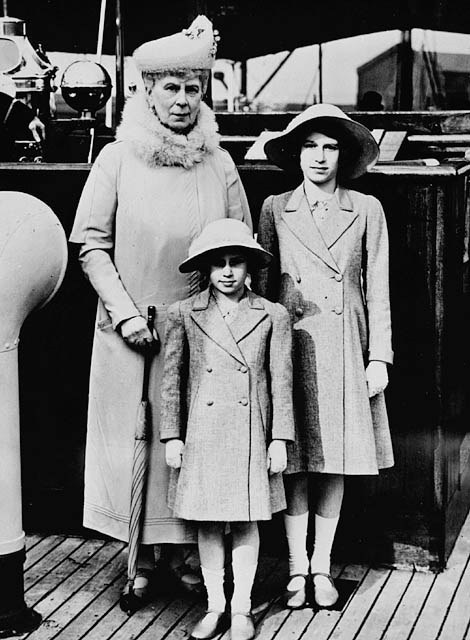
Queen Elizabeth II as a girl with her little
sister Princess Margaret and their
Cambridge granny Queen Mary
Although I am hoping for a girl (I do write about princesses, after all), the latest paparazzi snoopers are predicting a boy based on Kate’s shopping expeditions. So, let’s start with a name for a potential prince. 

For the first name, I think they will choose a regal name, but maybe not one that is from the strictly English tradition. This could mean the British king’s name James (although this is the name of the Queen’s youngest grandson and may be too connected to the Middletons as it is Kate’s brother’s name) or the purely Scottish one of Robert. I also like the idea of David as the name of both Scottish kings and Welsh princes. (Remember that they live in Wales AND will one day be the Prince and Princess of Wales). The medieval names of Richard, John and Stephen could also be resurrected, although kings with those names have tended to have terrible reputations. Another possibility is Arthur as a less expected choice with mystical/mythical connections. A stronger likelihood is George, the regnal name of the Queen’s beloved father.

For secondary names, I predict a tribute to William’s beloved grandfather Prince Philip, who is ailing, and a potential tribute to Kate’s dad, Michael.

For a daughter, much of the world is salivating over the possibility of a new Princess Diana, but I tend to agree with those who think that name would be more of a burden than an honor. However, they could use it as a secondary name. If they really want to shake folks up, they could use both Diana and Camilla and perhaps finally put to rest the nasty people who allege that William hates his father’s second wife.

As I mentioned, the bookies are giving fairly even odds on Alexandra as a first name, but I really think they will honor the Queen by calling the baby Elizabeth (which also is Kate’s middle name). They could also select Victoria, which is rumored to have been Charles’ choice if he and Diana had had a daughter. A nod to Scotland would be to use either Margaret or Mary, both of which are fairly safe guesses for secondary names. Other secondary name candidates are Carole or Caroline and Anne.

So, Catherine, if you are reading this, here are my final suggestions for you: (drum roll please)
Boy: Robert Philip Michael David or George Andrew Michael Charles
Girl: Elizabeth Carole Anne Louise or Victoria Margaret Diana Carole


UPDATE: 
The baby, a boy, was born at 4.24pm London time and weighed 8lb 6oz, according to the announcement from Kensington Palace at 8.30pm on Monday, July 22, 2013. He was ultimately named George Alexander Louis (all names that were in my pool of guesses!)

08 June 2013

Second Princesses

Reigning queens are somewhat rare, so younger sisters of reigning queens are even rarer. Here are some of these fascinating ladies who were always a princess but never a queen.

Elizabeth and Margaret on a 1947 stamp.
The most famous younger sister of a queen is undoubtedly Princess Margaret of Britain. Four years younger than her much steadier regal sibling, Queen Elizabeth II, Margaret was a lively young girl who grew into an even livelier young woman. However, both girls led a very sheltered life due both to their status and to the onset of World War II. The somewhat cloistered environment helped foster a situation where Margaret fell in love with one of her father's, later her sister's, equerries, Peter Townsend. Although a decorated war hero, he was 16 years older than she and married to someone else. His divorce did not make the romance easier, since the Church of England does not accept divorce and society was much more strict about such things. Margaret chose not to risk her Civil List payments and, after years of painful consideration, did not marry him. She then went on a bit of Harry-esque tear about society, mixed in with Bohemians and selected to marry a photographer. With "indiscretions" on both sides, they later divorced. She continued picking questionable lovers--she was an original Cougar. Her smoking, drinking, etc. took a toll on her health. She died the same year as her beloved mother, at the age of 71. (Read more about her and Townsend in my two-part post, An Affair to Remember.)

The royal family before Christina's birth.
In The Netherlands, Queen Beatrix actually had a trio of younger sisters, a couple of whom caused a barrel of concerns in their time. Princess Irene nearly caused a diplomatic catastrophe by her choice of groom. Not only was Prince Carlos Hugo a Catholic (once again a bigger issue with religion then than now) but he was a pretender to the Spanish throne. At that time, Spain was under the dictatorship of General Franco, with whom the couple seemed too close. The Dutch government did not wish to be seen to be supporting either Franco or one pretender over another. (Ultimately, the Spanish throne was restored, but to Juan Carlos.) Irene's very political behavior led to a government denunciation of her actions. Less than 20 years later, the couple divorce. The youngest sister, Princess Christina, caused great heartache for her family through no fault of her own. Her mother contracted German measles during her pregnancy, which led to Christina developing serious vision problems. Her parents, particularly her mother, relied on nontraditional, faith healers. This caused issues in their marriage, and the influence of these unconventional advisors distressed the public. Modern medicine ultimately helped restore most of her sight. Like her sister, Irene, Christine chose to marry a Catholic and was required to give up her right to the throne. Also like Irene, she eventually divorced him. Only the middle sister, Princess Margriet, has caused no public scandal, has remained happily married, and is still considered part of the royal family. (Read my post about Princess Margriet.)

Denmark's Queen Margrethe II has a pair of younger sisters. Both of them have always behaved impeccably. Princess Benedikte wed at age 24 to Richard 6th Prince of Sayn-Wittgenstein-Berleburg, who passed away in 2017. They had a son and two daughters. Interestingly, the marriage rules of the princely house are stricter than those of today's reigning monarchies. Therefore, Benedikte's son Gustav, who succeeded as the 7th prince, has been unable to marry his longtime love Carina Axelsson. Carina, however, is fully accepted as a member of the extended royal family, even wearing family jewels on occasion, and she manages the family castle. The youngest, Princess Anne Marie, was the first of the trio to marry when she wed the newly crowned King Constantine II of Greece just two weeks after her 18th birthday. The couple had three children in quick succession, but the third one was born in exile after the royal family fled the politically tempestuous country, eventually losing the crown. They later landed in London, where they are still based, and added two more children to their brood.

Few people realize that Queen Victoria actually had a sister, too. She is often portrayed as a lonely, only child, locked away in her palace, but she actually had an older half-sister and half-brother from her mother's first marriage. Like her sis Victoria, Princess Feodora of Leinengen is actually a great-great-great-great grandmother of today's royal bride. Twelve years older than Victoria, they only lived together for a few years as Feodora married and moved back to Germany when Victoria was just eight. Both sisters did not like the restrictive atmosphere of their mother's home in Kensington Palace, but they remained close throughout their lives and Victoria often gave her money to visit her in England. However, Feodora died nearly 40 years before her royal sister.

14 May 2013

The Original Queen Streak

On April 30, 2013, the longest streak of queens regnant came to an end when Queen Beatrix of The Netherlands abdicated. Beatrix, her mother and grandmother had reigned for a combined 123 years without any kings between them. However, this was not the first time there have been three queens in a row. It happened once before in Tudor England.

Everyone knows that King Henry VIII had a penchant for discarding his wives. Most people know that he was primarily motivated by his desire to father a male heir. The Tudors were not very successful at producing healthy boys, but they did do a fairly good job at making little girls. Henry's generation had one boy (him) and two girls live to adulthood. The three of them together had five girls and one boy live to adulthood. In fact, by the time Henry died, all of his legal heirs were female except for his nine-year-old son, King Edward VI, who only lived a few years after ascending the throne. With Edward's death in 1553, there was only one other male Tudor descendant living, a five-year-old Scottish grandson of Henry's older sister Margaret, but all of the Scots had been barred from inheriting.

No one wanted to revert to a male descendant of the Yorks or Lancasters. The Wars of the Roses had ended in the last century when Henry's Lancastrian father seized the throne by right of battle and married a Yorkist princess. Besides, the Tudors had been fairly thorough in eliminating most of the potential heirs from the old lines. That left seven female Tudor descendants as the only conceivable monarchs.

Politics and religion quickly caused a struggle for power. There were potentially three real contenders, and interestingly, all three eventually became queen.

Since Henry broke with the Church, the rising tide of the Protestant Reformation had caused deep rifts in the country. One one side stood the Catholics who included Henry's oldest daughter Mary. On the other were the Protestants, among whom was young King Edward and his protectors. Henry's third child, Elizabeth, tried not to talk about religion very much.

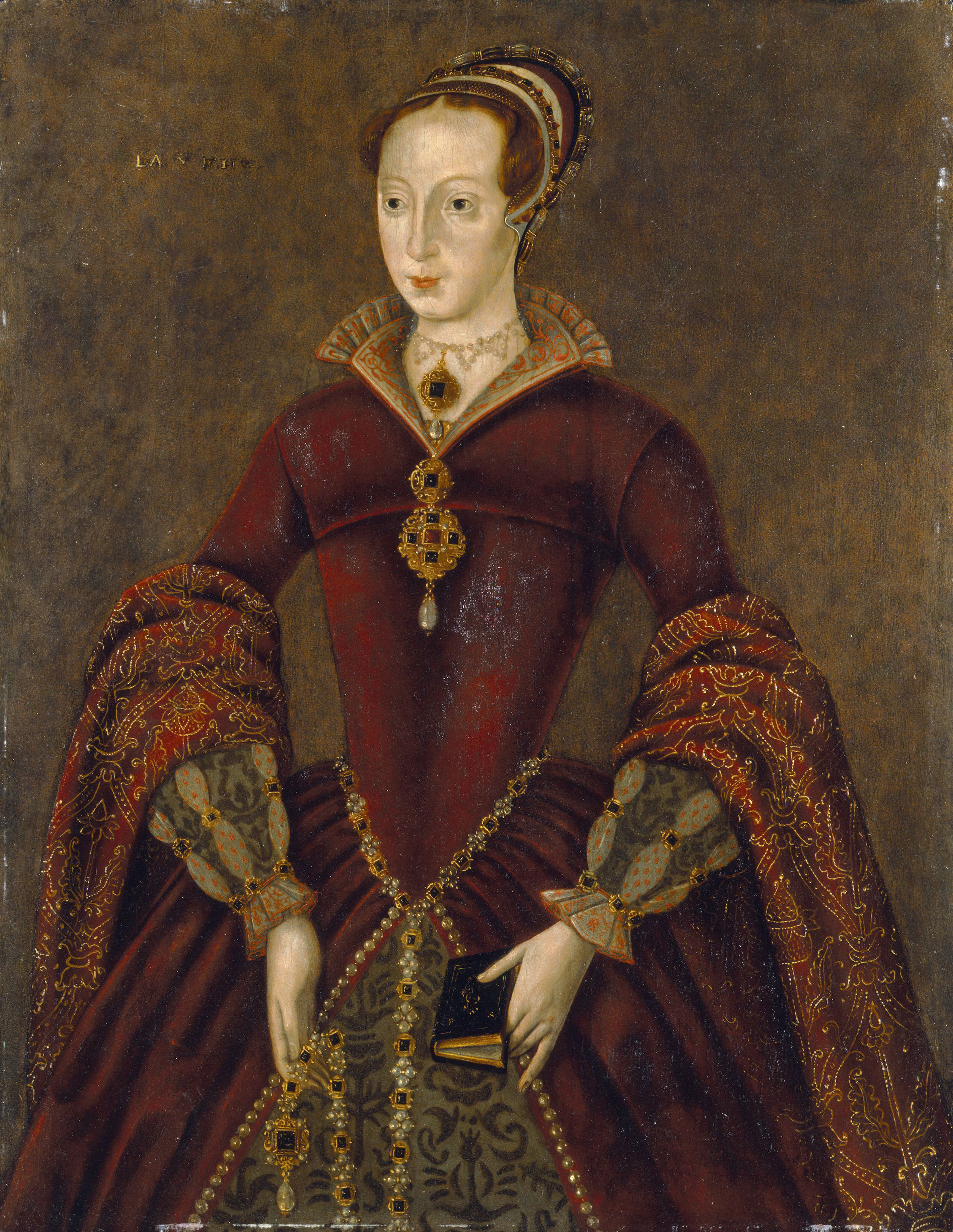
Queen #1: Lady Jane Grey
With Edward's death, it looked like power would shift back to the Catholics, so Edward's regent, the Duke of Northumberland, hatched a plot to protect Protestantism and to benefit himself. He married his son Guilford to Edward's Protestant cousin, Lady Jane Grey. Weeks later, Edward died. Both Mary and Elizabeth were not in London, which provided Northumberland his opportunity. He placed 16-year-old Jane on the throne and began trying to consolidate power. Unfortunately for him, and ultimately for Jane, the English were not pleased with this very irregular coup. Mary marched on London, easily overcoming any resistance. After a nine-day reign young Jane was imprisoned in the Tower. Northumberland was executed within weeks, but Mary hesitated to exact vengeance against Jane. After all, Jane had been nothing more than a pawn in the scheme and she was barely more than a child. Nevertheless, Mary strongly desired to marry her cousin, King Philip II of Spain, who did not think it was a good idea to let pretenders to the throne linger and potentially attract supporters. Mary was persuaded, and had Jane beheaded the following February.

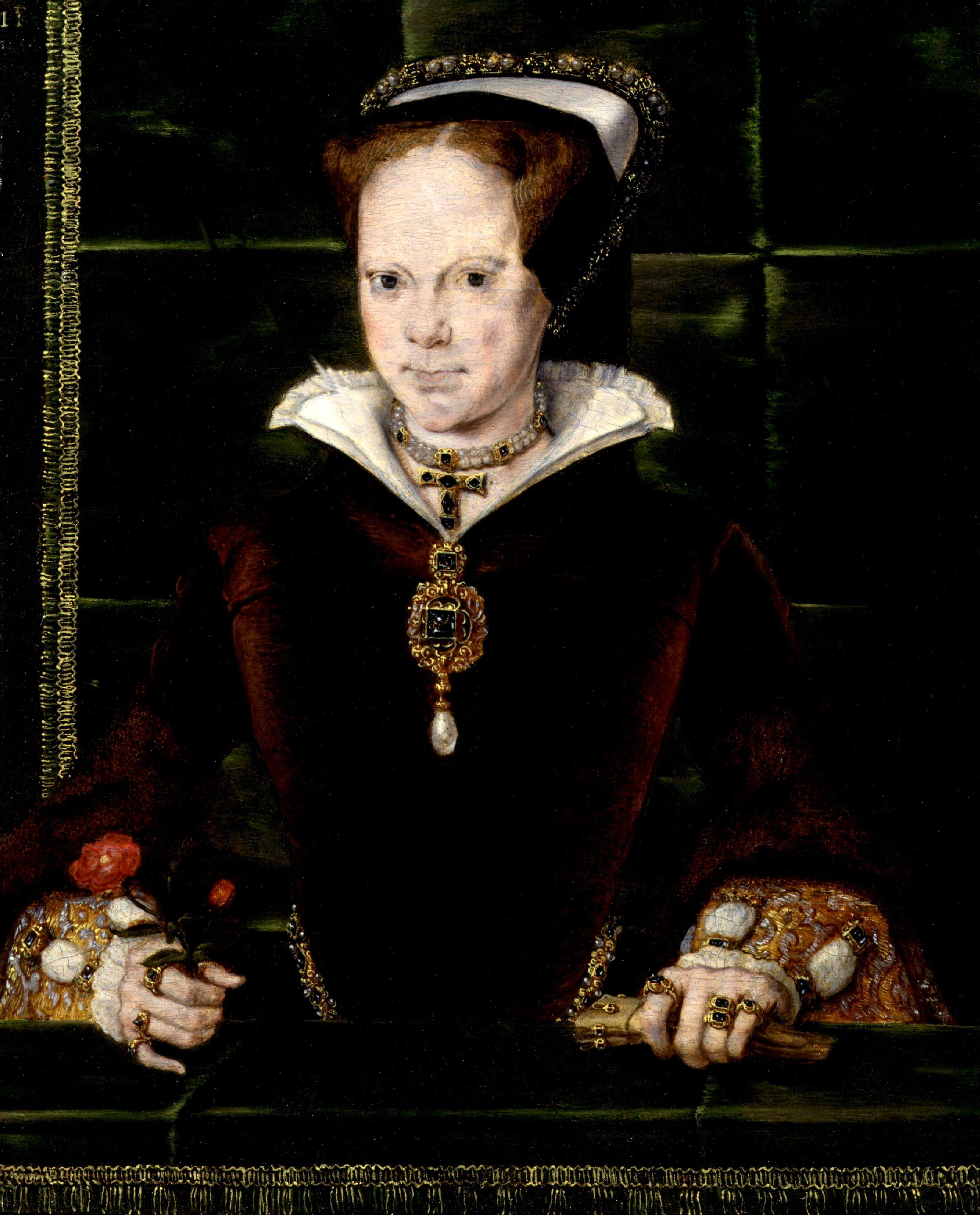
Queen #2: Bloody Mary
Thanks to the bitter divorce struggles of her parents, Henry VIII and Catharine of Aragon, Mary's adolescence and early adulthood were marred by great emotional pain. She was separated from her mother, and was not even allowed to visit her on her deathbed. To add insult to injury, Henry also declared her a bastard and would not allow her to marry. By the time she came to the throne at age 37, she desperately wanted to marry and have a legitimate Catholic heir to bring England back to church her maternal grandparents, Ferdinand and Isabella of Spain, had fought so hard to defend. Her marriage to Philip, who was often out of the country, provided little opportunity for conception. Mary endured two phantom pregnancies before dying of influenza at age 42. During her five-year reign, she concentrated most of her efforts on restoring Catholicism and persecuting Protestants, thereby earning the nickname that eventually inspired the morning cocktail.

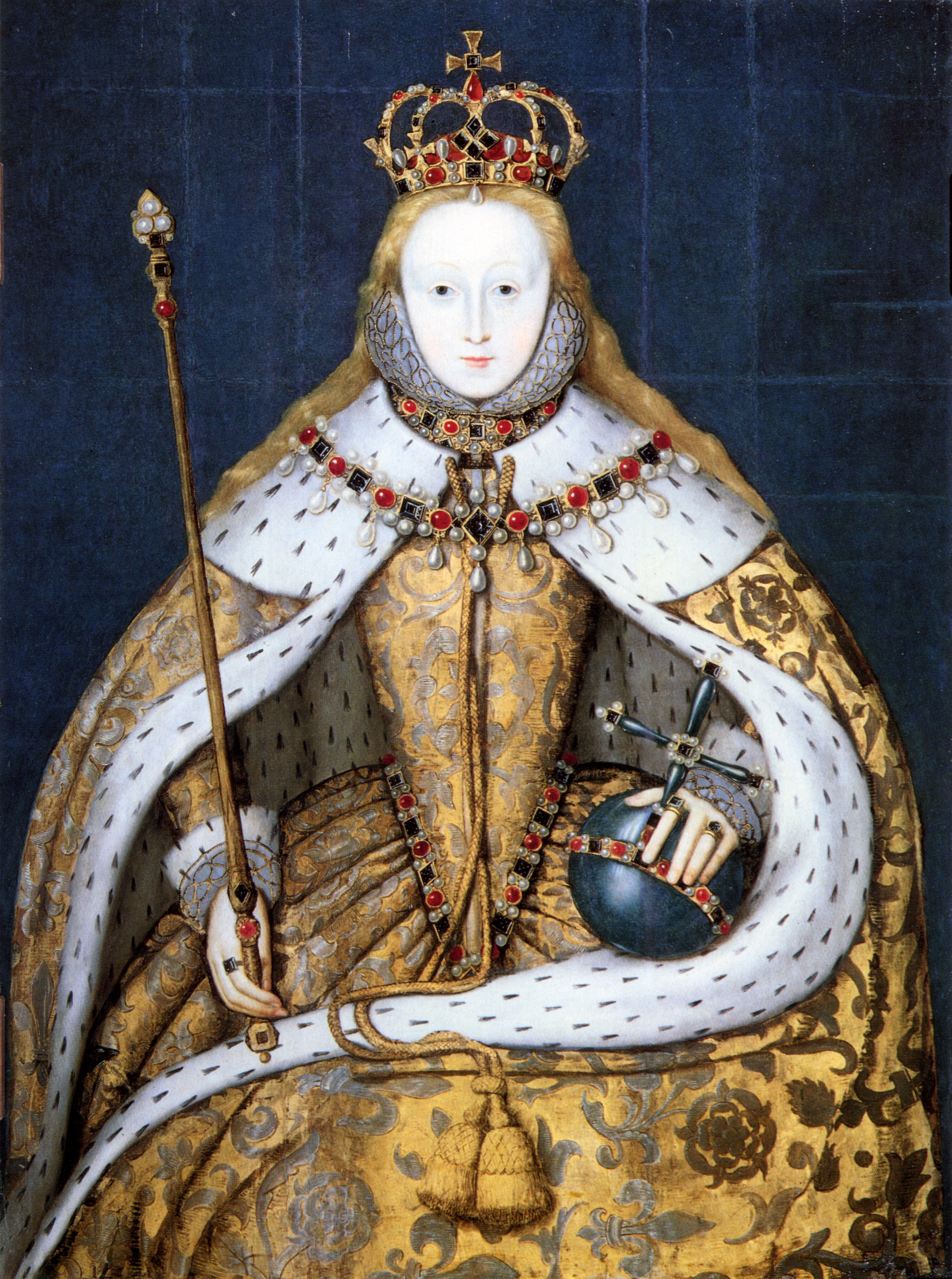
Queen #3: The Virgin Queen
During her sister's reign, Elizabeth dutifully served her sister and carefully sidestepped the question of her religion, although she was unable to protect herself from others who used her name as the focus of rebellion. She spent some of the time imprisoned, but managed to sweet talk her way into Mary's good graces. She acceded the throne with no problems, and quickly removed England from the Catholic church. Like her sister, Elizabeth had a traumatic childhood. Her mother, Anne Boleyn, had been beheaded on trumped-up charges of adultery when Elizabeth was only three. Elizabeth then watched her father work his way through three more wives. Elizabeth was also declared a bastard and marriage was closed to her by her father, brother and sister, each of whom did not wish to empower her prospective bridegrooms. Elizabeth does not seem to have developed a strong desire to marry and dilute her authority over her kingdom, her household or her person. Instead, she used her potential marriage as a bargaining chip. Men all over Europe sought to marry her and she squeezed every bit of influence, power or money out of each opportunity without ever taking a husband. Her long reign was one of glory for England, especially after the defeat of her brother-in-law Philip's Spanish Armada, and the establishment of colonies in America. When Elizabeth executed her cousin and prospective heir, Mary Queen of Scots, for treason, she eliminated the possibility of adding a fourth queen to the queen streak. She was succeeded instead by Mary's son James.

Thus, the first three-queen streak in history lasted 48 years from 1553 to 1601.

For more about these Tudor queens and their propensity for killing their cousins, read my post Killing Queens: A Bloody Tudor Heritage.