06 March 2011

Fire at the Palace

Katherine clung to her mother as the flames leapt around them. Somehow an ordinary summer day had turned into a raging nightmare for the three-year-old princess and her family.

All had seemed normal that July morning in 1916. The hot, summer heat was just as oppressive as the day before. The Greek King Constantine I, his German-born wife Sophie and their family were at least a bit cooler at their summer retreat at Tatoi, outside of Athens. Political turmoil was running rife in the country as factions urged the king to join enter World War I as an ally of the Triple Entente, but Constantine believed Greece should remain neutral. The nation had emerged victorious but scathed by the Balkan Wars just three years earlier. Strife and mayhem were nothing new in the region. The king’s father George I has been assassinated by an anarchist in 1913, in between the two Balkan Wars, but Constantine was fearless in his opposition to joining the new war.

“The salvation of Greece is more precious than the Greek throne,” he would tell a New York Times reporter later that summer. Greece was more important, he continued, than “the life itself of Constantine.”

The summer before Constantine had battled illness and survived. Even this bout with pleurisy had become fodder for his political enemies, who denied that he had been sick. Rather, they alleged, he had been stabbed by his own wife, the evil sister of the belligerent Kaiser Wilhelm.

The fact that Queen Sophie was rarely on good terms with her brother did not enter the equation. The fact that she was a granddaughter of Queen Victoria and had been raised by her mother Victoria Princess Royal to love all things English was blithely ignored. The fact that she had actually been in England on her annual holiday when World War I started did not matter. Whenever war is afoot, a foreign queen is an easy target, even if that queen had once been banned from Germany for converting to orthodoxy.

By the middle of 1916, Greece was being torn into two factions, those who supported the king and neutrality and those who supported the former prime minister and the Entente. For months, the Entente, particularly France and Britain had been waging a campaign to make the royal family’s position untenable, spreading lies about the king and his wife.

So, on the torrid day in July, it probably seemed like a welcome distraction when someone spotted a bit of smoke on the horizon in the forest of the estate. Constantine, Sophie, three-year-old Katherine and several members of the household decided to drive out and take a look at what was happening. No one thought about how dry oak and pine could become in the midst of a summer drought. No one considered how quickly hot, summer winds could drive a blaze under those conditions.

Suddenly, the royal cars were practically surrounded by walls of flames. With no room to maneuver the vehicles, everyone jumped to the ground and started running. Sophie grabbed up Katherine, the youngest of her six children, and scrambled for the clearing. Constantine chased after them but then realized that some of their party had been left behind. He returned to try to help them, but it was too late.

For two miles, Sophie ran with her terrified baby. Unaware of her husband’s fate, not knowing where she could flee for true safety. Her only certainties were the breath in her lungs and the babe in her arms.

Back in the fire, Constantine struggled to help others as flaming branches fell on him. Desperate to escape, he jumped from a bridge to save his life. Early reports said he had been badly injured, damaging his face and a leg, but only his clothes were damaged.

In the meantime, soldiers and sailors were sent from Athens to battle the blaze. They tried to cut a firebreak between the conflagration and the villa, but it was of no use. At the villa, people were working quickly to remove furniture and pictures—anything that could be removed—before the flames arrived. The garage filled with seven cars was consumed. Then, the barracks of the Royal Guard. As the fire spread, it eventually reached the home of the crown prince and that of the king’s widowed mother. By nightfall, the flames were licking at the king’s villa. The inferno raged for two days. Various reports claimed anywhere from ten to forty people perished, including several people from the king’s “immediate suite.”

“It was a terrible, and yet a remarkable experience, being in the midst of that hell,” King Constantine said days later.

As it turned out, that hell was not yet over. Early presumptions that the fire had been caused by a careless smoker were soon replaced by fears that the fire had been set intentionally in an attempt to kill the king and his family. Arsonists were almost certainly to blame, but the exact culprits were never found. In 2007, Princess Katherine’s obituary placed blame on the secret police.

Considering the delicate position of the royal family, that may be a reasonable accusation. Within a year, the entire royal family, except their second son Alexander, were forced to flee the country under threat of bombardment by the Entente. With the neutral king and his heir Crown Prince George neutralized, the new King Alexander was forced to rubberstamp Greek’s alliance with the Entente and declared war.

In 1920, Alexander died of infection following a monkey bite and a plebiscite returned Constantine and Sophie to the throne. Their return, however, was short-lived. They were exiled once again in 1922. They both died in exile.

When their first son was returned to the throne in the 1930s, Constantine and Sophie were returned to the royal burial ground at Tatoi. In the 1967, their grandson King Constantine II was forced out of Greece and monarchy was abolished.

Today, Tatoi is better known as Decelea after the nearby town. As with other Greek royal properties, it has been the subject of protracted legal disputes between the exiled family and the government. In 2007, the family was awarded compensation for the estate, which is now considered state property. The amount of the award is equal to pennies on the dollar.

26 February 2011

Royal Baby Names for Frederik and Mary

With only six weeks remaining until the christening of Crown Prince Frederik and Crown Princess Mary’s adorable twins [view their official photos], I’ve been weighing their baby name choices in case they log on to the Princess Palace looking for ideas. On April 14, the names of the little prince and princess will finally be announced, so here are some names to consider:

Family Names

It’s possible, the little prince could be named John, in honor of his maternal grandfather, but unlikely to be named Henrik in honor of his paternal grandfather since Frederik’s brother Prince Joachim gave that name to his third son last year. They might also choose to step back one more generation and select Andre for Frederik’s French grandfather, Count Andre de Laborde de Monpezat or Peter for Mary’s Scottish grandfather, Peter Donaldson. Henri and John, however, are already among the names given to the couple’s firstborn child, Prince Christian Valdemar Henri John.

For the little princess, the most likely family names might be Margrethe for Frederik’s mother the Queen, Ingrid for Margrethe’s mother or Henrietta for Mary’s late mother. However, Frederik and Mary gave all of these names to their first daughter Princess Isabella Henrietta Ingrid Margrethe, so maybe not. Since the royal family recently celebrated Queen Ingrid’s centenary year, I would not rule it out entirely. Other family names include Renee for Frederik’s French grandmother and Jane or Patricia for Mary’s sisters. As a long shot, I will also mention Alexandra for Frederik’s popular ex-sister-in-law, the former Alexandra Manley, who is now Countess of Frederiksborg.

Royal Names

As the oldest monarchy in Europe, Denmark offers scores of possibilities in its long history. The names of the couple’s first two children came from Danish royal history. Prince Christian got his name because for centuries, the crown was past from Frederik to Christian to Frederik in a loop that was only broken when King Frederik VIII had no sons. As for Princess Isabella, Frederik and Mary selected it after perusing their royal history. It was a rather surprising choice because there has really only been one other Isabella in all of that history, a 16th-century queen consort known as Isabella of Austria, daughter of the Spanish Queen Juana the Mad and therefore granddaughter of Ferdinand and Isabella as well as niece of Henry VIII’s first wife Catherine of Aragon.

With these choices for the first two children, don’t be surprised if they follow the same pattern in naming the new babies. For girls, this list includes Feodora, Marina, Cecilia, Thyra, Mariane, Louise, Charlotte, Juliana, Amalia, Ulrika, Christina, Eleonore, Augusta, Philippa, Martha, Adela, Emma and Catherine. Since another prominent royal event is taking place elsewhere in April, I would eliminate Catherine and Philippa from this list (to avoid concerns that the princess is being named for either of the Middleton sisters.) Eleonore seems to be popular among current European royals: Princess Leonor of Spain, Princess Eleonore of Belgium and Countess Leonore of Orange-Nassau in The Netherlands. I don’t know whether this popularity makes the name a more or less likely choice. I personally am a fan of Charlotte, Helena, Emma and Cecilia, while Mariane could pay tribute to the baby’s mother the Crown Princess, her aunt Princes Marie and her great-aunt Queen Anne Marie of Denmark.

The list of royal boy names offers many, many Nordic choices like Eric, Knud, Olaf, Haakon, Valdemar, Niels and Harald as well as possibilities like Christopher, Carl, George, Adolf, Jacob and Abel. For some reason, Jacob and Abel seem attractive to me; perhaps because they have been rarely used, just like Isabella. They also work well in Princess Mary’s mother tongue of English. I think Harald and Haakon are unlikely since these are the names of the current Norwegian king and his heir and Christopher would seem odd for a boy with a brother named Christian. Or, perhaps in honor of the Disney version of the Danish story, “The Little Mermaid,” the baby will be christened Prince Eric.

Australian Names

Another possibility is that Mary will reflect her Aussie upbringing by selecting names that are popular in Australia, which could lead to the rather informal choice of Prince Jack or the very surprising Princess Madison and Prince Cooper. However, the top ten list of most popular Australian baby names also includes the potentially appropriate-enough Olivia, Lily, Chloe, Grace and Amelia as well as William, Thomas, Max, James and Alexander.

Greenlandic Names

Another option might be to honor the people of Greenland who are also subjects of the Danish queen. Popular names there include Karen, Johanna, Helene and Anna for girls and as well as Peter, Lars, Soren and David for boys. Of course, the couple could choose to celebrate the Greenlanders by selecting ethnic Greenlandic names such as Princess Allinna, Ivi, Paarma or Usinna and Prince Atoq, Manu, Peri or Tavik.

My Choices

Based on nothing more than my own intuition, I’m placing my top five choices for each baby as Ingrid, Margrethe, Helena, Louise or Henrietta for the little princess and Andre, John, Jacob, Eric or Peter for her brother.

22 February 2011

"Old" Royal Brides

In light of recent reports that Catherine (Kate) Middleton is the “oldest royal bride EVER” in England, I decided to put together a quick list of royal brides older than 29-year-old Kate. [UPDATE: Meghan Markle will be 36 when she marries Prince Harry of Wales in May 2018, but she will not be the oldest royal bride either.]

Maria Fitzherbert, 29
A young widow, Maria married George Prince of Wales in 1785 after he begged her many times, even faking a fatal illness to gain her sympathy. The couple kept the marriage secret because it threatened his royal status on two accounts: he did not have the king’s permission and, since she was a Catholic, he could no longer be in the line of succession. Maria, however, did not enjoy having a secret marriage and was not pleased by her husband’s philandering ways. The couple experienced several separations, especially after 1795 when he (bigamously) married a princess in order to get Parliament to erase his debts. Maria and George’s marriage was never terminated but it was also never officially acknowledged. She died before he became King George IV in 1820.

Eleanor of Aquitaine, 30
Eleanor was at least 30 and perhaps a bit older when she married the future King Henry II, having just received an annulment from her first husband, King Louis VI of France. Eleanor was about 11 years older than her teenaged second husband and the two enjoyed an active married life, which resulted in eight children. Together they ruled an “empire” that stretched from Scotland to southern France, but their relationship was often rocky. When she sided with their sons in rebellion against Henry, he imprisoned her for 11 years. She was only released after his death. She lived into her late 80s, never slowing down for a second: one of her last acts was to travel over land to Spain to retrieve her granddaughter and bring her back to marry the French heir.

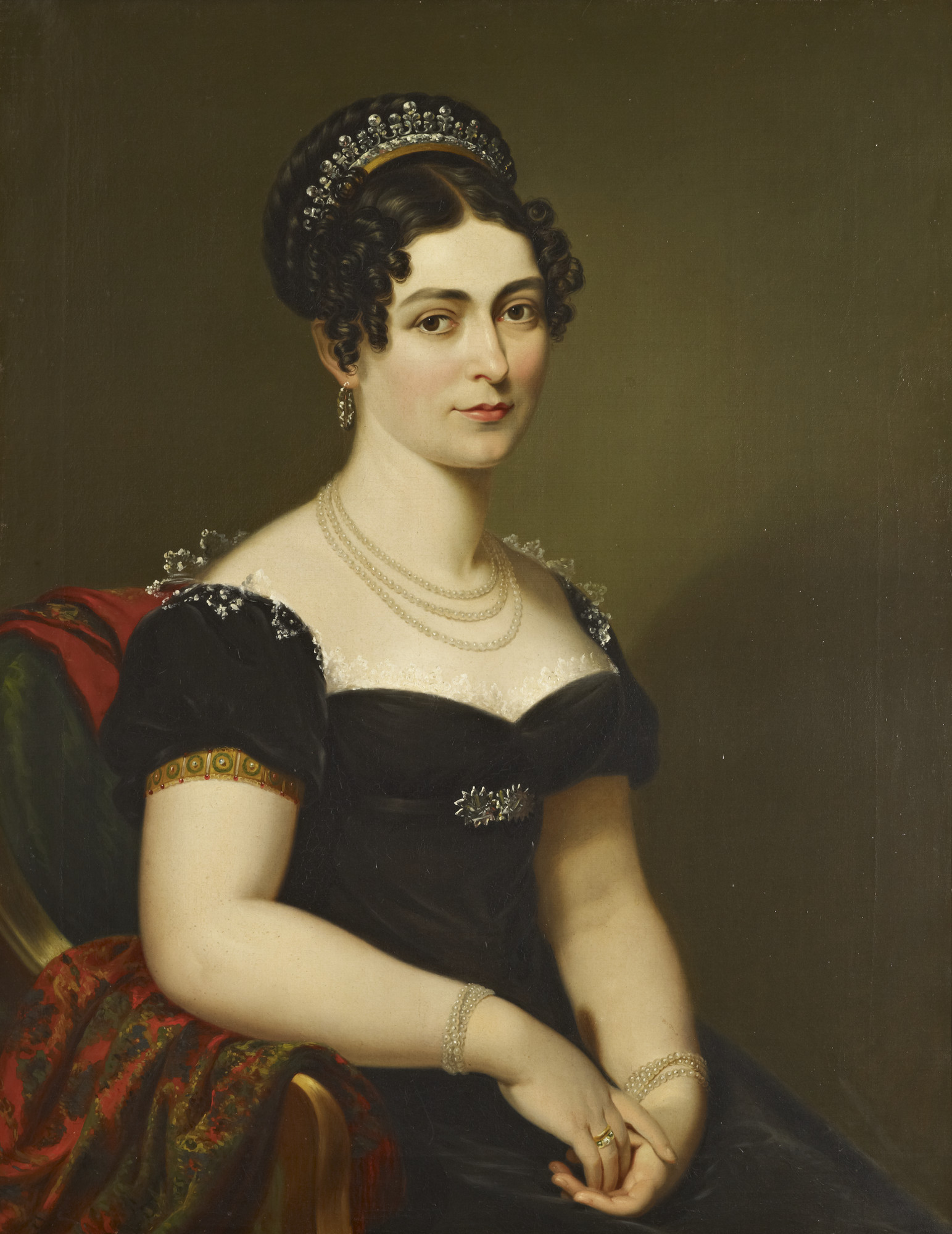
Victoria of Saxe-Coburg, 31
Although she did not marry a direct heir to the throne, at the time that Victoria married Edward Duke of Kent in 1818, it was possible that he might become king because none of his three older brothers had living heirs. Victoria was a widow with two young children. Her proven fertility worked out well for Edward and the couple quickly produced a daughter, also named Victoria. A few months later, though, she was widowed again. It is widely rumored that she had a romantic liaison with her comptroller, Sir John Conroy, and that the two of them hoped to rule the kingdom when Edward’s daughter succeeded the throne in 1837. Young Queen Victoria, however, quickly established her independence, sparking a schism with her mother that took years to mend.

Katherine Parr, 31
Katherine’s birth date is uncertain, but it is possible that she was in her thirties when she became Henry VIII’s final wife. Henry was her third older husband with grown children, although she had never had any children of her own. By this stage, however, Henry had become disillusioned with young wives and had likely given up on having any more legitimate children. Nevertheless, Katherine nearly met an untimely fate, not for cuckolding the king like her beheaded predecessors but for holding reformist religious beliefs. Luckily, she intercepted her arrest order and was able to persuade the king that she appeared to adopt these views for the sake of providing good debates for his intellectual mind. Katherine outlived the king, married her one true love and died in childbirth shortly after.

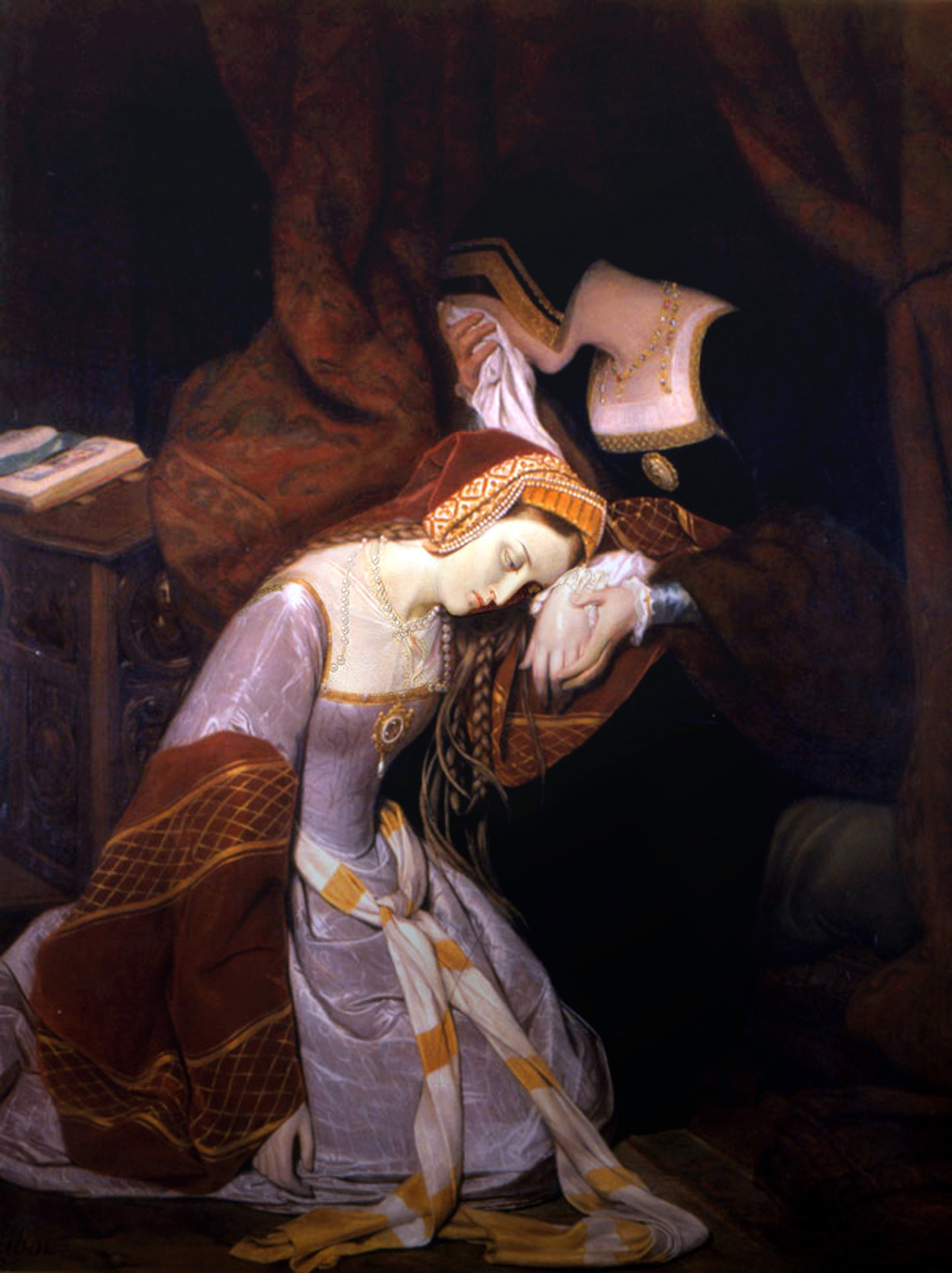
Anne Boleyn, 32
Henry VIII’s infamous second wife also has an uncertain birth date, but she may have been in her thirties when Henry finally freed himself from his first wife and quickly married Anne, who was already pregnant or quickly became so. After giving birth to the future Queen Elizabeth I, Anne failed to have another living child and Henry grew tired of her demanding personality. Anne’s enemies were able to provide the king with (probably) false evidence of Anne’s infidelity and she met her end at the hands of the axeman.

Joan of Navarre, 32
Joan was the widow of the Duke of Brittany when she married the widower King Henry IV. Between them, they had 16 children, but they had no kids together. In addition to being politically advantageous, the marriage might also have been based on affection. Joan is said to have been a good stepmother although she was later accused of using witchcraft to try to kill her stepson, King Henry V, after her husband’s death. She spent a few years imprisoned but then was released and lived another 14 years.

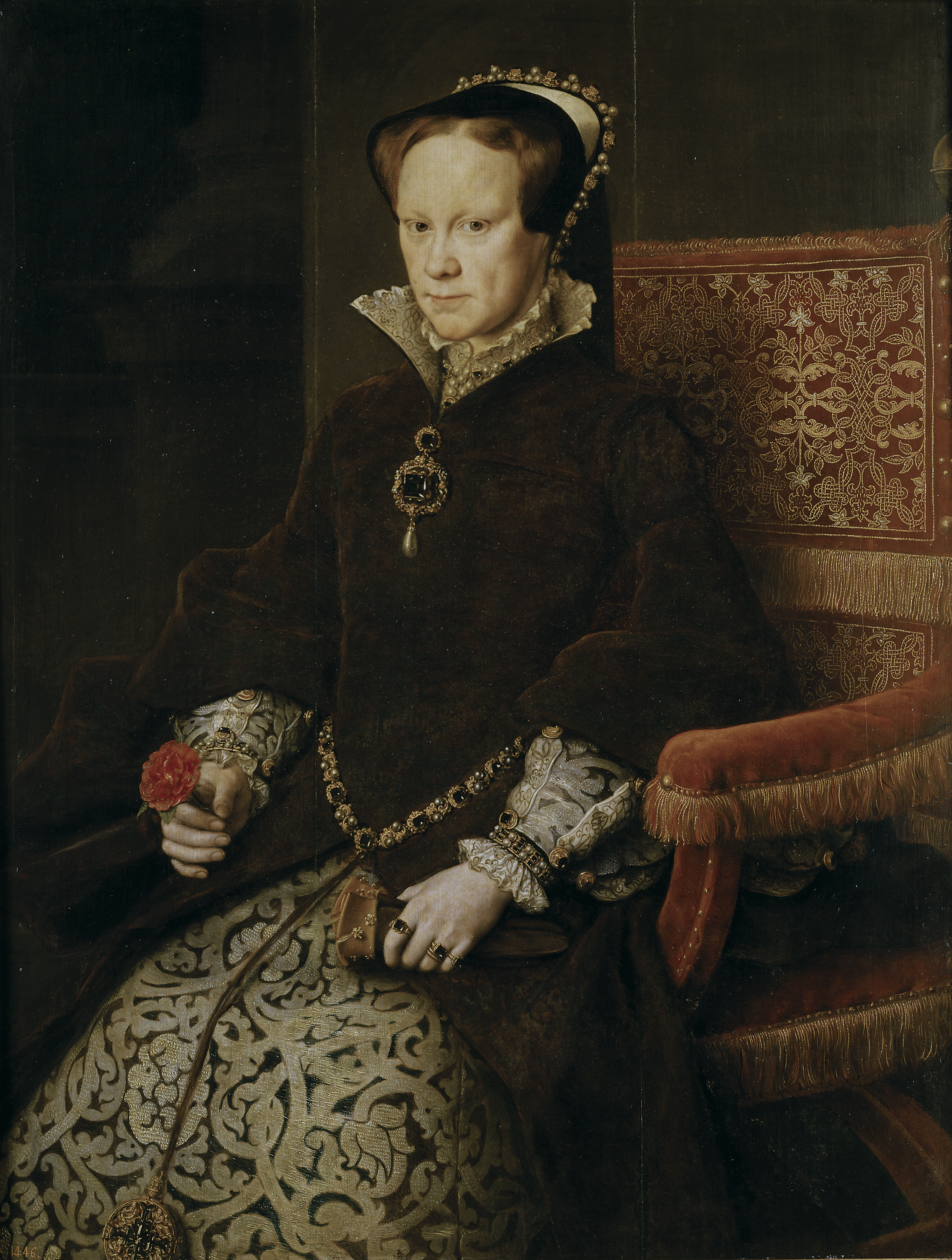
Queen Mary I, 38
One of Queen Mary’s first acts once she ascended the throne was to marry her cousin, the future King Philip II of Spain, who was more than 10 years younger. When she was a young princess, Mary had been the presumptive heiress and her father King Henry VIII had pursued several possible marriages for her. Once he became obsessed with producing a male heir, Mary’s status deteriorated and, at one point, she was even declared a bastard. Her unstable status not only meant that her father could gain nothing politically through her marriage, but that men could not risk marrying her. By the time she was finally able to marry, it was really too late for her. She imagined herself in love with Philip but he certainly viewed it as a purely political match. He remained in England for about a year while Mary endured a phantom pregnancy. She was devastated when he left, but he did not return for two years. When he left again, she once again imagined that she was pregnant. She died several months after it was clear that no child was coming.

Camilla Parker-Bowles (née Shand), 57
Having been painted as one of the worst villains in modern times, Camilla finally married her longtime love, Charles Prince of Wales, in 2005. She is, without a doubt, the oldest person to marry an heir to the throne. The couple met in their twenties, but Camilla married someone else while Charles was pursuing his naval career. When he later married Lady Diana Spencer, it quickly became clear that they were ill-matched and his relationship with Camilla soon resumed. Following his divorce and Diana’s tragic death, public feeling against Camilla was extremely high. Another eight years passed before things had calmed down enough for Charles and the now-divorced Camilla to marry. Controversy still exists, however, as represented by her decision to use one of her husband’s lesser titles and be called Duchess of Cornwall rather than Princess of Wales. Upon his accession, will she be Princess Consort as announced when they married or will she be Queen? In her own words, “You never know.”

OTHER OLDER ROYAL BRIDES
In the last 100 or so years, it’s actually more common for royal brides to be a bit older rather than younger. Diana was barely 20 and the Queen was 22, but nearly all the other Windsor women were in their late twenties or older.

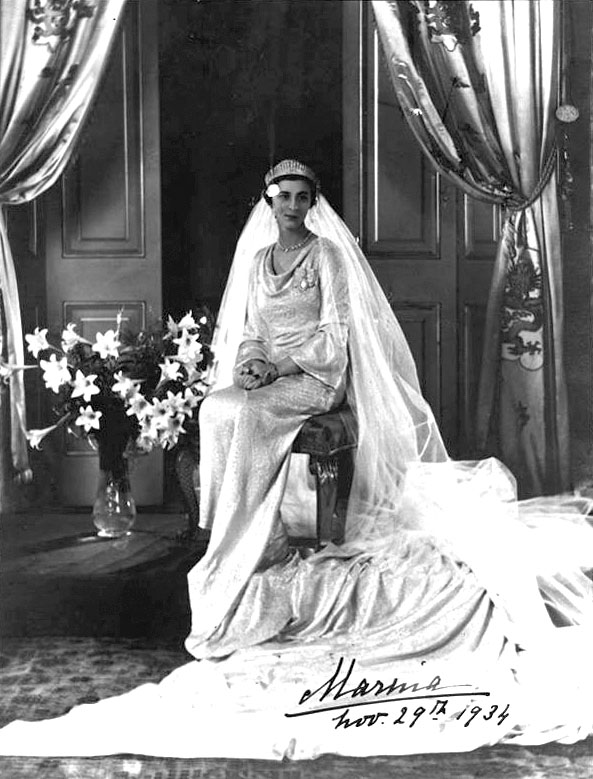
Marina of Greece was 27 when she married the Queen’s uncle, Prince George The Duke of Kent in 1934.

Her daughter-in-law, Katharine Worsley, was 28 when she married the current Duke of Kent in 1961.

Queen Victoria’s youngest daughter, Princess Beatrice, was 28 when she married Prince Henry of Battenberg in 1885.

Sylvana Tomaselli was 29 when she married the Earl of St Andrews in 1988.

Sophie Winkleman was 29 when she married Lord Frederick Windsor in 2009.

The Queen’s sister, Princess Margaret, was 29 when she married Antony Armstrong-Jones in 1960. The couple later divorced.

Queen Victoria’s popular granddaughter, Princess Patricia of Connaught, was 31 when she married Hon. Alexander Ramsay in 1919 at Westminster Abbey and voluntarily surrendered her royal titles.

Autumn Kelly was 30 when she married the Queen's oldest grandson, Peter Phillips, in 2008.

Lady Alice Montagu-Douglas-Scott was 33 when she married another uncle of the Queen, Prince Henry The Duke of Gloucester in 1935. She had her first child one week before her fortieth birthday.

The previously married Baroness Marie Christine von Reibnitz was 33 when she married Prince Michael of Kent in 1978.

Sophie Rhys-Jones was 34 when she married Prince Edward The Earl of Wessex in 1999.

Lady Louise Mountbatten, born Princess Louise of Battenberg, an aunt of  Prince Philip, was 34 when she became the second wife of Crown Prince Gustav Adolf in 1923. She became Queen of Sweden in 1950.

Princess Paola Doimi de Lupis de Frankopan was 37 when she married Lord Nicholas Windsor in 2006.

Wallis Warfield Spencer Simpson was 40 when she married her third husband, the recently abdicated King Edward VIII, and became the Duchess of Windsor in 1937.

Anne The Princess Royal was 42 when she married her second husband Timothy Laurence in 1992.