28 April 2013

End of the Queen Streak

The world's longest period of female leadership will come to an end on April 30, 2013 when Queen Beatrix of The Netherlands voluntarily hands over her throne to her eldest son, Willem Alexander. She and her two immediate predecessors--her mother and grandmother--have kept the throne in female hands for nearly 123 years. In fact, before Willem Alexander's birth in 1964, no princes had been born in the Dutch royal house for more than a century. In other countries, this would have been a catastrophe that could have ended the monarchy. Not so in the more liberal Dutch nation.

The first Dutch Queen, Wilhelmina, was barely 10 years old when she succeeded her elderly father, King Willem III, in 1890. Her three elder half-brothers had predeceased him. Little Wilhelmina was not allowed to inherit her father's Grand Duchy of Luxembourg, however. Female inheritance would not be permitted there for another couple of decades.
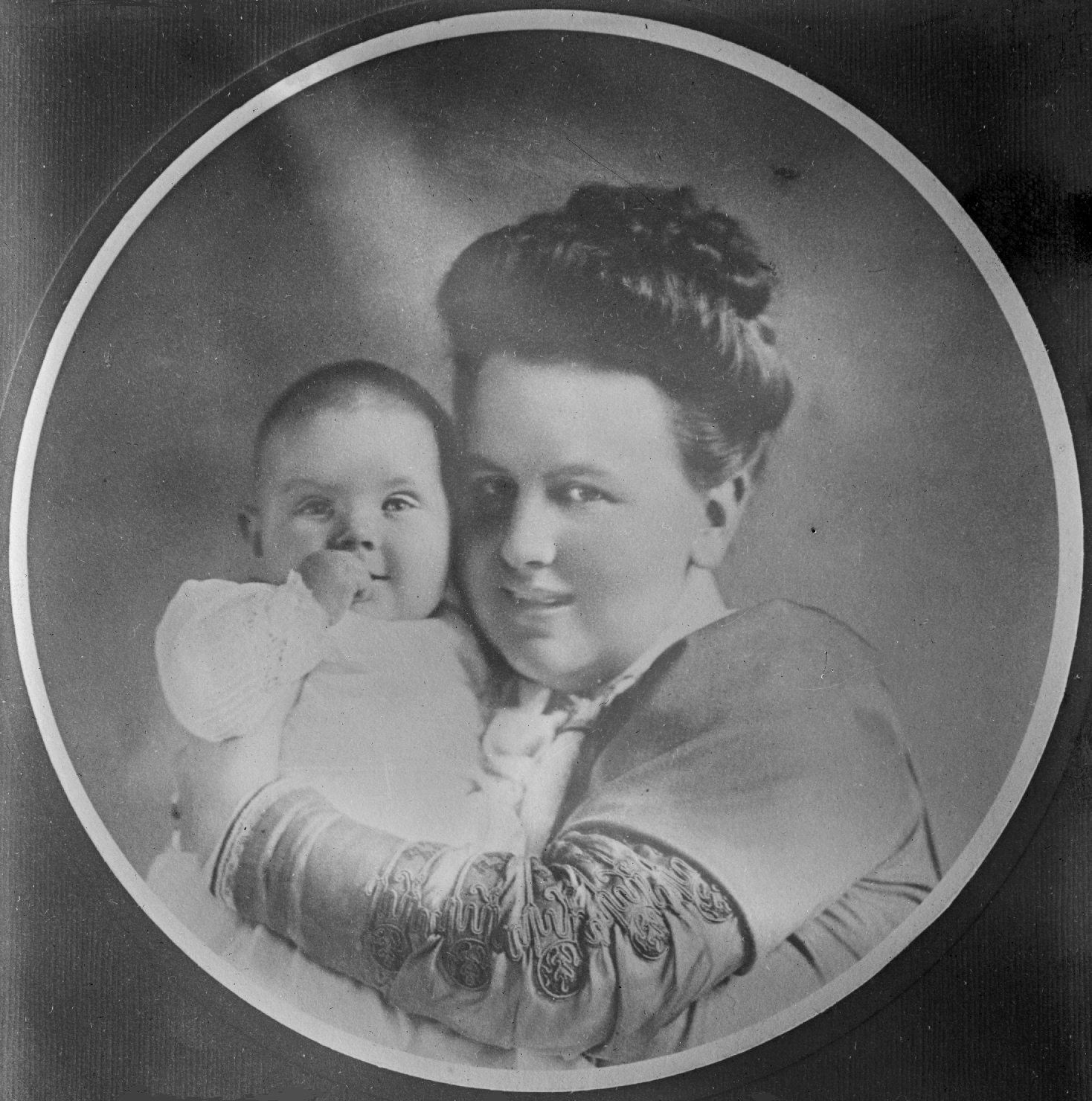

Wilhelmina and baby Juliana
The young queen married at age 20, but the succession continued to be a primary concern as her nearest male relatives were Germans--something the independent Dutch did not favor. Adding both personal pain and national anxiety, Wilhelmina struggled to have a child. Miscarriages and a stillborn son meant years of agony and worry. By the time her daughter Princess Juliana arrived in 1909, the Dutch were more than thrilled to have an heir of any gender, especially as Germany grew more bellicose in advance of the first world war. More miscarriages followed and it soon became clear that baby Juliana was the hope of the nation.

Throughout her reign, Wilhelmina exhibited great strength of character and intelligence. It was she who created the vast fortune that, through careful stewardship by her heirs, has kept the Dutch monarchs near the top of the list of the world's wealthiest people. She also served as an inspiration to her people during both world wars, even when the entire royal family had to be evacuated during the Nazi occupation of The Netherlands. Using her influence and political acumen, she was able to prevent the Dutch prime minister from making a separate peace with Germany and thereby endangering the Allied war effort. In his own inimitable way, Winston Churchill paid his tribute to Wilhelmina by calling her the only "real man" among the many exiled governments that had taken refuge in England.

It was also during her reign that the country started its greatest efforts reclaim land from the sea--a successful venture that continues to this day, helping make The Netherlands one of the world's leaders in issues concerning both environmental conservation in general and water resources in particular.

Nevertheless, the stress of the war years and recurring illness caused Wilhelmina to decide to abdicate in favor of Juliana in 1948. She devoted the rest of her life to supporting her daughter and her religious interests. She passed away in 1962.

Nearing 40 at the time of her accession, Juliana had already proven her leadership abilities and her fecundity. Where her mother had struggled to have children, Juliana had been much more successful--although all of her four children were girls, this no longer was a problem for the Dutch. Juliana had spent WWII with her young children in Canada. Her third daughter, Margriet, was born in Ottawa. In gratitude for the welcome she received there, Juliana sent tulip bulbs to Canada every year until her death, and a Canadian Tulip Festival is still held annually in Ottawa.

Juliana was one of the first royal heirs anywhere to receive a university education, and was the best educated female heir anywhere, setting a tradition that was followed in Denmark and Sweden, but not in England, where the current Queen Elizabeth II was educated by governesses and occasional private sessions with an Etonian historian. During her mother's illnesses, Juliana had served as regent before ascending the throne. That experience and her excellent training had prepared her to oversee the difficult dissolution of Dutch colonies in Suriname and Indonesia.

It did not, however, prepare her for a great personal crisis. During her final pregnancy, Juliana contracted German measles, which left the infant Princess Marijke (later called Christina) blind. The deeply religious Juliana turned to a faith healer whose intervention did nothing to improve the child's condition or the royal reputation. Much like Rasputin in Imperial Russia, the healer began to influence political decisions. A power struggle developed between the Queen and a faction led by her husband, forcing Juliana to dismiss the healer and many of her other advisors. The marriage survived, but more controversies followed when their second daughter married a Catholic pretender to the Spanish throne and then the eldest daughter and heir married a German diplomat at a time when Dutch feelings about the German occupation were still very sensitive. More devastating controversy followed in the 1970s, when it was revealed that her husband had taken a $1.1 million bribe from an American aircraft manufacturer.

Despite all of this, Juliana maintained strong popularity throughout her life due to her extraordinary interest in charitable activities, particularly the plight of refugees and children. The Dutch also appreciated her down-to-earth persona. It was she who really invented the "bicycle monarchy," choosing this method of transport to be closer to the people and preferring not to be called "Your Majesty."

In 1980, Juliana followed the precedent set by her mother and handed the throne over to her eldest daughter Beatrix. She continued her charitable works until overcome by dementia and died shortly before her 95th birthday in 2004.


Like her mother, Beatrix is well-educated and very popular. Like her mother, she had several children--although her three are all boys. And like her mother, she has suffered her own share of heartache and controversy. As mentioned earlier, her marriage to German Claus van Amsberg was greeted with suspicion and violence, resulting in smoke bombs being thrown at the royal wedding coach. Her own investiture festivities were rocked by violent protests from socialists demonstrating for housing reforms. In 2009, she and the royal family survived an assassination attempt when the assassin missed plowing his car into the royal bus and instead killed several spectators gathered for the Queen's Day festivities.  Later the marriage of her heir to the daughter of a former Argentine official who is suspected of involvement in the deaths of thousands and the marriage of another son to an ex-girlfriend of a suspected mafioso also raised alarm. More tragically, that same son, Prince Friso, has been a vegetative state since being caught in an avalanche while skiing last winter. [Prince Friso passed away on August 12, 2013.]


Neverthesess, Beatrix has become a popular monarch. Her personal style is as well-recognized in Europe as Queen Elizabeth's is in the Commonwealth. Her big hats, printed dresses, ruffled collars and vast jewelry collection have been imprinted on the minds of all of her people. 

Her abdication announcement was greeted with widespread affection and an outpouring of appreciation. With her departure, the Dutch throne returns to male trusteeship, but this is only temporary as the new King has only daughters, the oldest of whom, Princess Catharina Amalia, will assume the heir's title of Princess of Orange at the tender age of ten--the same age her great-great grandmother was when she started the Queen Streak in 1890.


08 April 2013

Watch List: Princess Margriet

Number 13 on our list of princesses to watch in 2013 is Princess Margriet of The Netherlands. She made the list because this year marked her 70th birthday, and she certainly did not disappoint. Margriet probably received more attention than she has had in years--maybe since her wedding in 1967 and the births of her four sons over the next eight years.

Margriet with her husband, children and grandchildren

In addition to the adulation she received in The Netherlands for her birthday on January 19, she also got a lot of attention in the country of her birth: Canada. The princess was born there during World War II, where her mother, Princess Juliana, then heir to the throne, took refuge following the German occupation. The new baby was named Margriet, meaning Daisy, in honor of the flower that symbolized Dutch resistance. As a Canadian-born Princess, she has a specially place in Canadian hearts.

Margriet was in the news again in February when her husband, Prof. Pieter van Vollenhoven, had successful heart surgery. She continues to make the local and royal news cycles with her ongoing work in support of the monarch, the arts and culture, and health issues. In fact, the European Cultural Foundation even presents an annual award in her name. The recipients have included cultural theorist Stuart Hall, dancer-choreographers Jerome Bel and Pichet Klunchun, dramaturg and activist Borka Pavićević, theatre-maker Stefan Kaegi, visual artists Šejla Kamerić and Kutluğ Ataman, film-maker and cultural activist John Akomfrah, museum director and curator Charles Esche, conductor Yoel Gamzou, and Romanian visual artists Dan and Lia Perjovschi.

Margriet was born fourth in line to the throne, after her mother and two older sisters. She is currently ninth in line, and would be much lower if it weren't for the marriage choices of her sister Irene and nephew Friso. On April 30, she will retain her place, but her sons will lose theirs because the Dutch constitution only allows for those who are within three degrees of relation to the monarch to be in the line of succession. As the new king's aunt, she still counts.

For those of you who miss the quizzes at Certified Royal Expert, here is a trivia question for you:
Princess Margriet married a commoner. Her older sister, Princess Irene, married a prince. Why is Margriet still in the line of succession but Irene is not? Post your answers in the comments.


30 January 2013

A Royal Double Standard


What’s good for one queen is not good for another. As soon as Queen Beatrix of The Netherlands announced that she will abdicate in favor of her son on April 30, 2013, people began speculating (again) about whether Queen Elizabeth II would ever “retire” in the same fashion. I’ve seen some well-informed discussions (like this one on Marilyn’s Royal Blog) on the topic, but the bottom line is that it simply will never happen in Elizabeth’s reign or in the reign of her son, Charles.

The Dutch Difference


The throne in The Netherlands has always had a much more democratic tradition. Until 200 years ago, there was no monarch; the Dutch nations were led by stadtholders, quasi-elected officials albeit usually selected from the same families through the generations. However, it was not at all unusual for the Low Countries to rebel against and replace their leaders if they were unhappy with them. (This tradition is undoubtedly one reason Dutch Prince William was just fine with a de jure takeover of the British throne from his father-in-law King James II in 1688.) In the 17th Century, one of these stadtholders, William of Orange, emerged as the most powerful and it was his line that eventually regained control after Napolean’s brother, his puppet King of Holland, was removed. Only then, in 1815, did a Prince of Orange proclaim himself King of the Netherlands. Even then, however, the kingdom was established as a constitutional monarchy.

Wilhelmina and Juliana
Within a few generations, the dynasty ran out of male heirs and his ten-year-old great-granddaughter Wilhelmina became the first Dutch queen. It was she who set the precedent for regal retirement when she stepped down after shepherding her people through two World Wars and nearly 58 years on the throne.  Her decision was based largely on the stress of ruling in exile during the second war and sharp decline in her health, which had led two brief regencies. Her only child, 39-year-old Juliana therefore became queen in 1948. Wilhelmina lived another 14 years.

Queen Juliana became the personification of the “bicycle monarchies” of Europe. She regularly appeared among the public dressed like an ordinary person, riding her bicycle and insisting on being addressed as “Mevrouw” (Dutch for “Mrs.”) rather than “Your Majesty.” It was not at all for the queen to just pop in without ringing first to schools and organizations around the country. After almost 32 years as queen, she stepped down on her 71st birthday, April 30, 1980. Over the next two decades, Juliana began to sink into dementia and ill health. She passed away in 2004 just before her 95th birthday.

The oldest of her four daughters became Queen Beatrix in 1980 at age 42. At 75, Beatrix has chosen to reign to a later age than her mother and grandmother. Based on their lives, she could easily live another 10 to 20 years. Unlike her grandmother, she had time to enjoy being a child, a wife, and a mother before becoming queen. By waiting until now, she has enabled her heir to see his three little girls at least reach school age. But, the decision also means that the new heir to the throne will be a 10-year-old girl, Princess Catharina Amalia—a parallel to Britain’s Queen Elizabeth II who suddenly became the heir when she also was only 10, as pointed out in this post on Royal Musings.

In keeping with the more democratic style of the Dutch monarchy, they also do not crown their monarchs in an elaborate and deeply religious ceremony. In fact, they do not crown them at all—Dutch monarchs are inaugurated.

The British Tradition

Queen Elizabeth and Prince Philip
after her holy consecration
as Queen in 1953
The British monarchy is steeped in much more ancient and sacred traditions. Even if you reach back only 1,000 years to mark the “beginning” as the Norman Conquest, after which King William I was anointed with holy oil on Christmas Day in 1066, you have gone many times further back in history than the Dutch crown. Over the centuries, British monarchs in both England and Scotland and then the united Great Britain, have been selected by strict (although sometimes revised) dynastic rules or by military conquest, but only once by anything approaching popular decision (the aforementioned Glorious Revolution by William of Orange and his Stuart wife Mary in 1688)—and that led to another century of warfare between William and Mary’s Protestant successors and Catholic claimants to the throne. The turbulent late medieval and Renaissance crown was often characterized by competing dynastic claims and religious strife. The close identification between the person of the monarch and his/her role as head of the Church of England was firmly established nearly five centuries ago by Henry VIII. All monarchs since then, except Edward VIII, have not only been anointed in a holy right and taken kingly vows before God but has been the official supreme leader of the Anglican church.

This long-established religious aspect of the British crown is one of the strongest reasons the deeply faithful and observant Elizabeth would never willingly step down as monarch. She would see it as breaking a promise she made to God.

Elizabeth also would see it as breaking a promise she made to the people of the United Kingdom and its old Empire, a vow she made voluntarily on her 21st birthday when she announced that her “whole life whether it be long or short shall be devoted to your service and the service of our great imperial family.” The fact that it has been long, then, really has no bearing on her willingness to continue to fulfill her sacred trust. Based on her own mother’s life, she could live in relatively good health to be more than 100 years old. Even if she were develop serious illness, including dementia, it is unlikely that anyone would require her to abdicate. Britain already has the example of the relatively long regency of mad King George III’s son that could be employed if the Queen really could not continue her duties.

Elizabeth's parents
We also must remember that while the Queen has lived a relatively charmed life, it has been dotted with a few tragedies: the popular backlash against her in the wake of Diana’s death in 1997, the Windsor Castle fire of 1992, the early death of her father and her own accession at the tender age of 25 in 1952, and the transformation of her beloved Uncle David into the wayward Duke of Windsor. 

While the David’s brief reign as King Edward VIII in 1936 is merely a historical footnote to nearly everyone else on the planet it is an indelible scar on the heart of Elizabeth. His decision to pursue his personal desires over his royal duties caused his 10-year-old niece, who had so recently lost her beloved grandfather King George VI, to be torn from her cozy family home in a London townhouse to the drafty, discomfort of Buckingham Palace. It drastically reduced her time with her beloved and doting parents. And, perhaps most importantly, it created deep bitterness in her mother that was undoubtedly communicated to her Elizabeth. When the strain of being king, especially through World War II, seriously weakened the health of King George VI and contributed to his early death, Elizabeth’s mother was lost and angry for many, many years. All of this made a huge impression on Elizabeth: to not do one’s duty, in her mind, has serious and far-reaching consequences.

William and Kate
on their wedding day
Plus, arguments that Charles will be too old to be king likely make little sense to her. After all, her great-grandfather waited 60+ years to be king, too. And, as Edward VII, he was a much better king than he was a Prince of Wales. Plus, the longer she reigns, the longer her beloved, motherless grandson William can enjoy the less demanding status of second-in-line instead of heir. It was for William and Harry’s sake that she miscalculated the public’s anger against her in 1997. She thought to protect them in the obscurity of the Scottish royal estate instead of expose them to the paroxysms of grief that were choking London. If she thinks keeping William #2 will enable him to enjoy more time with Kate and their growing little family, that alone might be reason enough to stay on the throne until her very, last breath.