28 July 2013

Belgian Highnesses 3: End of a Fairytale

The tall stranger was spotted slipping through the back door of Prince Carl's Swedish home in 1925. Nothing remarkable really. Perhaps a new butler reporting for duty. No one guessed that the handsome young man was there to marry the youngest daughter of the house.

But, this was no Downton Abbey moment. The stranger was no rabble-rousing Republican as in the popular series. Instead, he was an incognito prince--the future King Leopold III of Belgium. In yet another twist, unlike so many royal marriages of the day, this pairing was no dynastic match or politic contract, Leopold and his carefree Swedish bride, Princess Astrid, were truly in love.

Astrid was the granddaughter of both a Swedish king and a Danish king, and the niece of the Norwegian king, but she grew up with little of the splendor one might expect for such a well-connected princess. With the precarious nature of royal thrones in the post-World War I era, her mother raised her children to be prepared in case they ever needed to take care of themselves--and each of the three daughters were even required to cook for the family once a week.

With two older sisters, a younger brother and many more prominent cousins, Astrid was not really considered a star among the intertwined Scandinavian royal families. In fact, some even considered her dull--one of her greatest passions was needlework. But, she was also kind and open-hearted. When she was just 14, her oldest sister Margaretha married their cousin Prince Axel of Denmark. It was a love match so intense that Astrid's mother joked that the couple could not be left alone together in a room with furniture.

In Belgium meanwhile, the prospect of finding a suitable future queen for Prince Leopold seemed a bit uncertain. A Catholic princess was preferred, but so many of the Catholic houses had fallen, and the German houses were still seen as enemies. So, when Leopold's mother, Queen Elisabeth, started quietly touring Europe to identify potential royal brides she was not at all put off by young Astrid's Lutheran faith. Instead, she saw an ideal daughter-in-law. Imagine her delight, when the couple fell deeply in love. Like her older sister, Astrid could barely keep her hands off of her fiance. The two were even spotted holding hands together in the street. When Astrid finally arrived in Belgium to a grand, public welcome, the couple's kiss was far from the demure pecks we now see on the British royal balcony calls. With such public displays of affection, the official engagement announcement hardly needed the Queen's additional statement that it had been a love match. In fact, her new family adored Astrid so much, that they put absolutely no pressure on her to convert to Catholicism as would have been required in earlier years. Instead, Astrid came to that decision on her own, several years later.

After a honeymoon in the south of France, where the couple could cuddle and hold hands without being recognized, the 21-year-old princess and her 25-year-old groom took up primary residence in small house on a royal estate. Within a year, their first child, Princess Josephine-Charlotte, was born. Three years later, their heir, Prince Baudouin, arrived. Astrid delighted in caring for her children and wheeling them about the garden and parks herself, much to the chagrin of some old stalwarts. She even cooked for her little family herself.

Publicly, Astrid, who with her sisters has trained as a nurse (partly, again in case she needed an income in the future) threw herself into good works, particularly supporting the disadvantaged, children and women. Her fundraising efforts were always wildly successful. And, she was increasingly thought to be the ideal princess: devoted to family ("I'm just a mother," she famously said.), duty and nation.

Then, in 1934, tragedy struck. In the middle of her third pregnancy, Astrid and the nation were stunned to learn of the accidental death of her father-in-law King Albert, who had fallen to his death while mountain climbing in Switzerland. Now, Queen of the nation at just 28, Astrid was deeply saddened by his loss, but she had something else to focus on:  the safe delivery of another little prince, whom she and Leopold named Albert in his memory.

While the family slowly adjusted to the change in their lives, the country fell even more madly in love with Astrid. When she wrote an open letter, called the Queen's Appeal, to assist those struggling through the deep economic crisis of the mid1930s, donations literally flooded in.

In the late summer of 1935, Leopold and Astrid took their two oldest children back to Switzerland, to holiday near the spot where King Albert had so recently died. Always athletic and outdoorsy, the couple enjoyed the freedom and adventure of their mountain trips. In the glow of that Swiss summer, they sent Josephine-Charlotte and Baudouin back home ahead of them, opting to stay just one more day to indulge in a few romantic moments alone so rarely afforded to parents of young children.

It was a gorgeous day as the couple--not king and queen for the moment, but doting husband and wife--set out in their open car to make one last hike in their beloved mountains. Leopold took the driver's seat, with the chauffeur in the back, while Astrid filled a familiar role as navigator with map at the ready. It was this which momentarily distracted Leopold as he approached a curve. Although traveling only 30 miles per hour, the car slammed first into one tree, throwing Astrid against the tree and out of the car. As it careened into another tree, Leopold was also flung out. The car came to as stop at last in a lake with no injury to the chauffeur. Astrid, however, was dead. She had been killed instantly due to head trauma. Leopold was devastated. He ordered the car sunk to the bottom of the lake.

Astrid Chapel
The Belgians, finally having recovered from the sudden death of King Albert, could not believe that their lovely young Queen was gone so quickly. She was not yet 30 years old. A chapel was built near the site.

In many ways, Leopold never recovered. Many speculate that Astrid might have prevented many of the troubles he later faced, disastrous decision-making during World War II and a highly unpopular second marriage, which ultimately led to his abdication when his heir, Baudouin was only 20.

Josephine-Charlotte grew up to become the wife of Grand Duke Jean of Luxembourg. Despite the widely held opinion that theirs was not a love match, they produced five children, and were married more than 50 years until her death from lung cancer in 2007.

King Baudouin did marry for love. His bride, the Spanish aristocrat, Dona Fabiola de Mora y Aragon, was his constant companion until his death in 1993. Queen Fabiola suffered five miscarriages, and the throne passed to Baudouin's younger brother Albert. Fabiola was deeply honored within the family and among the people of Belgium.
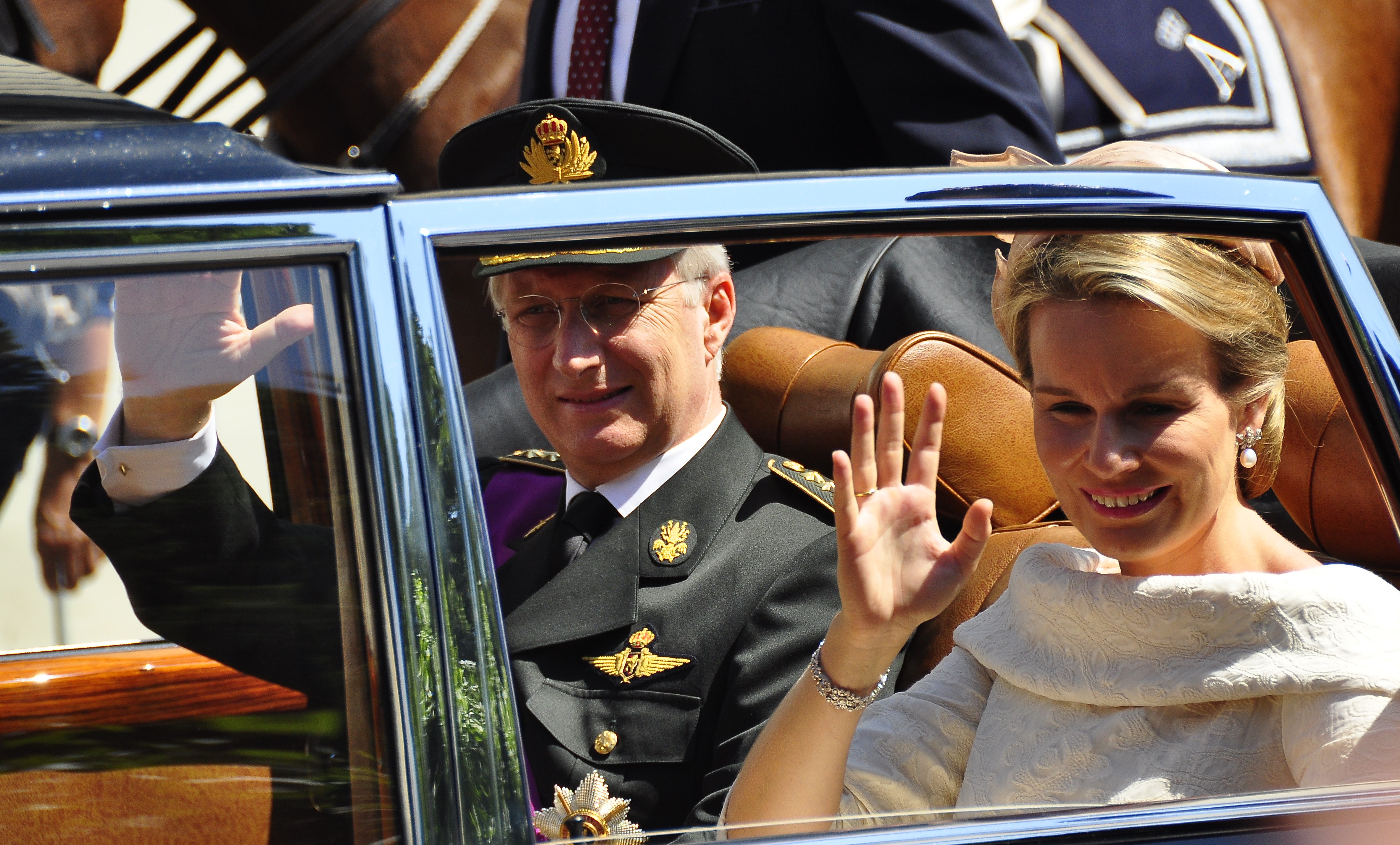
Belgium's new king and queen Philippe and Mathilde
Albert also married for love, the aristocratic Italian beauty, Paola Ruffo di Calabria. The couple have three children and 12 grandchildren. On July 21, 2013, King Albert II abdicated in favor of his oldest son, King Philippe, whose aristocratic wife Mathilde is the first Belgian-born Belgian Queen, and whose daughter Elisabeth is the very first female heir to the Belgian throne.

23 July 2013

Naming Prince X of Cambridge: A Scottish Surprise?

Many had hoped for a princess who might be called Diana.
With that name off the table, what should they name the prince?


THE BABY has been named Prince George Alexander Louis of Cambridge. Officially announced on Aug. 24.

With The Duke and Duchess of Cambridge's little one now safely delivered, the world has finally learned that the long-awaited, much-heralded child is a boy. Now we can stop talking about what-if situations like a new Princess Diana or Alexandra or Victoria or Elizabeth and start to focus on what in the world they might name a boy. With George and James topping most betting lists, beloved royal commentator Victoria Arbiter cautions that Prince William may just come up with a name none of us have thought of. (See my previous post, What Will Kate Name the Baby?, for my previously thought-of selections and an explanation of general royal naming traditions.)

Since the baby is scheduled to become king one day, I think we can safely presume that the traditionally minded royal couple will choose a name that has been used by a previous monarch.
As my earlier post states, after the Norman Conquest, English kings used just six different names: William, Henry, Stephen, Richard, John and Edward. After the thrones of England and Scotland were united following the death of the first Elizabeth, three more names were added: James, Charles, and George. Before the Conquest, some favorite kings had names like Alfred, Edmund, Edgar, Canute, and Harold.

But, who says William and Kate must limit themselves to English king's names. After all, they met and fell in love in Scotland, which is also the ancestral home of the late Queen Mother. There are several very ancient or very ethnic names that are highly unlikely, but possibilities include Kenneth, Constantine, Donald, Malcolm, Duncan, Alexander, David, and Robert.

Add to that the legendary and semi-mythic King Arthur, who is often now linked to Wales, and the list of possible first names consists of more than 20 contenders. A fair number of choices for any couple, I think.

In my previous post, I originally proposed Robert or George and later added David. I am now officially removing George from my guesses, because it has become just too "popular." The fact that it has been bandied about so much in the media makes me think Prince William will avoid it. Incidentally, I don't think the other popular choice of James will be used either since it is the name of Kate's brother. So, here are my top choices and why:

Robert the Bruce
Robert: Assuming that William and Catherine have an affinity for the land where they met and knowing that Scotland has been one of William's lifelong refuges from the prying press, naming their son for Robert Bruce, who is considered by many to be the best King of Scotland, might appeal to them. Interestingly, the oldest son of the first King William (the Conqueror) was also named Robert; he inherited Normandy while his younger brother inherited England. There have been no royal Roberts since the Stuarts but there have been three kings named Robert.

David: Sticking with the Scottish idea, David is another king name used during the Bruce era. (Did I mention that my dad is named David Bruce and his father was Robert Bruce?--not the same folks, of course.) David is also the patron saint of Wales, and was the name of two native Princes of Wales--an appealing connection perhaps since this baby will likely be Price of Wales one day. David had not been used in the royal family for centuries until it was reintroduced in 1894 among the many names of the future King Edward VIII who was known as David within the family. It was also the name of the late Queen Mother's younger brother (another Scottish tie) and is the name of the Queen's only nephew, Viscount Linley, whose daughter Margarita was a bridesmaid at William and Kate's wedding. And, of course, it has prominent biblical roots as the name of one of Israel's greatest kings. There were two Scottish kings named David.

Alexander: Another Scottish choice, Alexander also has very deep historical ties that stretch back to classical Greece with Alexander the Great. Since the new baby has already conquered the hearts of the world, it might be fitting to name him for a man who was one of the earliest world conquerors. Alexander has not been used as a princely name in Britain for several generations, but it is the name of the current Earl of Ulster, son of the Queen's first cousin, HRH The Duke of Gloucester. The female form, Alexandra, was also the name of The Queen's great-grandmother, who was Queen Consort a century ago, and it is the name of The Queen's first cousin, Princess Alexandra The Hon. Lady Ogilvy, who has been very ill lately and who is also one of Prince William's godparents. There have been three kings named Alexander.

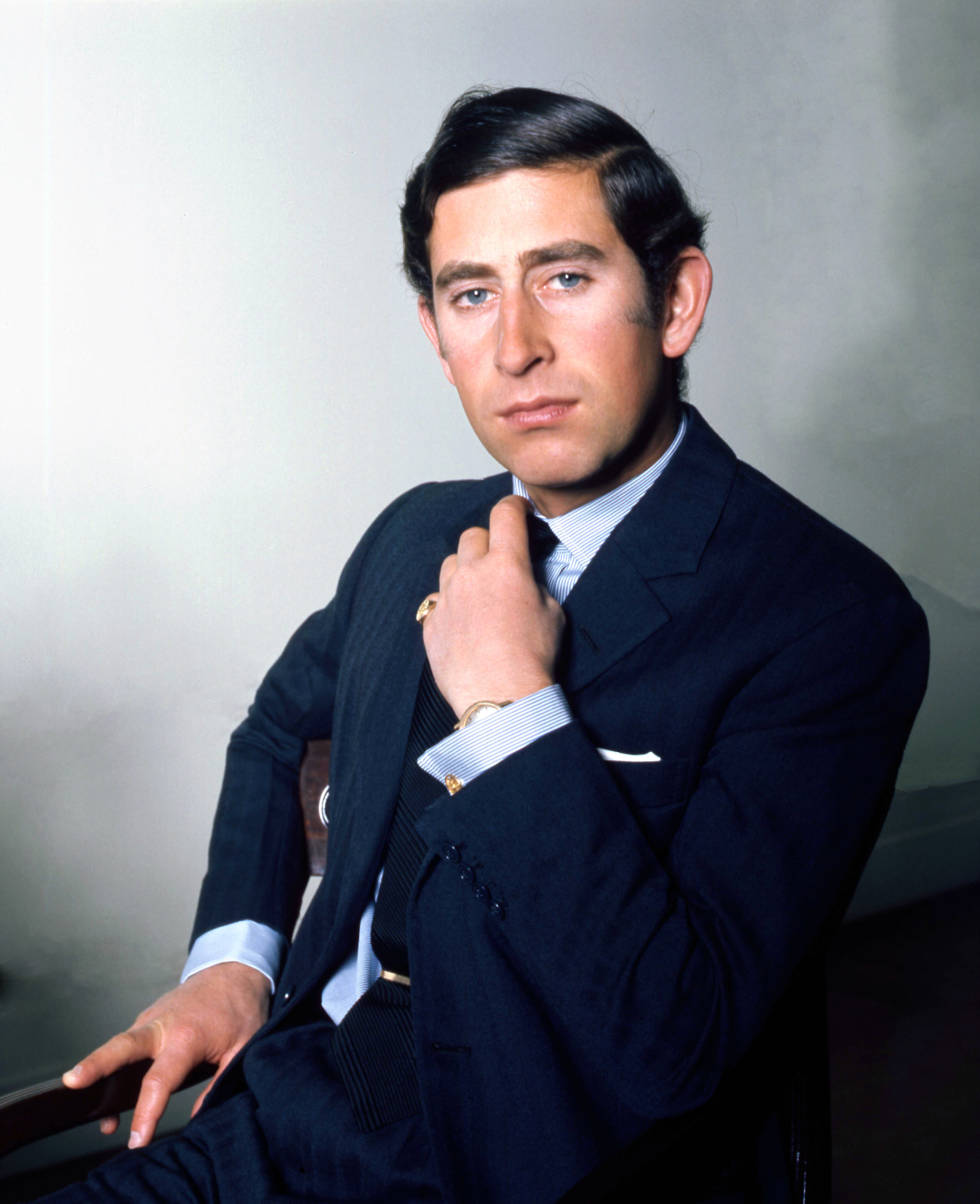
Prince Charles as a young man
Charles: Yet another one with Scottish connections. Both kings of this name (so far) sat on both the English and Scottish thrones but they were of the Scottish House of Stuart. The name had fallen so out of royal use by the mid-20th century that it was said to have been a complete surprise when the current Queen gave it to her first child. The Cambridges could choose to honor William's father (whose parenting skills have often been unfavorably--and quite unfairly--compared to Princess Diana's). The Prince of Wales is the only current royal with this name, although it has a tradition in the Spencer family and is the name of William's uncle, Earl Spencer. Since there is one more Charles in line for the throne ahead of him, the new baby would be Charles IV.

Alfred: This choice would reach back to the earliest days of English kingship. The only King Alfred is also the only English king to earn the epithet "the Great." The name was used for a son of George III who died young and for Queen Victoria's second son,The Duke of Edinburgh (now the title of William's grandfather), which gives this name a connection to Scotland, too. It is not currently used in the royal family and may seem so "old-fashioned" that most people would be genuinely surprised by it. Nevertheless, thousands of Alfreds would likely be christened in the next few years.

The 1st Duke of Wellesley
Arthur: My only suggestion for which I could think of no Scottish connections, the name is steeped in great heroic legends and would evoke British pride with a new Camelot, much the way that many have lauded the Second Elizabethan era. Queen Victoria used this name for her third son, The Duke of Connaught, who was named for the great Duke of Wellington, who defeated Napoleon at Waterloo and later became Prime Minister. This adds yet another nationalistic and heroic significance to the name. Among the current family, the name is used by one of the grandsons of The Queen's late sister, Princess Margaret.

Now, we just have to wait a little longer to see how well they will surprise us!!

22 July 2013

Welcome Royal Baby


For the last 32 weeks, the world has been building into a frenzy. Since it was first announced that Catherine The Duchess of Cambridge was expecting a child, there has been no end to the coverage and speculation. Actually, it started much sooner than that. In fact, before the Royal Wedding, I cautioned against getting too much royal baby anxiety too soon. (See Kate Middleton'sFirst Baby.) Her husband may have been born less than one year into his parents' marriage, but contemporary royal brides take longer. This baby is arriving more than two years after the wedding.

The last eight months have undoubtedly been filled with joy, anxiety and anticipation for the royal couple, but they have also been filled with irritation. First, the pregnancy was announced much earlier than usual because Kate had to be admitted to hospital suffering from hyperemesis gravidarum, a severe and dangerous form of morning sickness. This hyperextended the length of the public stage of the pregnancy.

Almost immediately, the intrusions started. Some criticized her for being a lazy, whiner who overreacted to sickness. Then, she was chided for going on holiday. Then, there were paparazzi snaps of the baby bump in a bikini. Then, it was that she was staying too thin. Then, she was not carrying on enough royal duties.

On the other side, Kate's supporters gushed over every moment. Where she shopping? What was she buying? What was she wearing? 

Every aspect of the pregnancy has been dissected. When and where was the baby conceived? Midwife or doctor? Hospital or home delivery? Could it be twins? Boy or girl? Was she too posh to push?

Kate and William spent last week at her family's home in Bucklebury, away from the prying eyes of London, but even there, their peace was disturbed when a rescue vehicle was called to free a dog who had caught its head in the fence. Was the emergency crew coming to take Kate to hospital? Was it her dog that had caused the brouhaha? Perhaps is was just one more soul trying to get a peak into the circus that "The Daily Show" dubbed "Her Majesty's Secret Cervix."

Unfortunately, the chatter and intrusion is unlikely to peter out after the delivery. Every detail will be discussed: length, weight, horoscope, hair color, eye color, gender, name, godparents, pram name, university plan... (Read my post on what they will name the baby.)

I suspect that when Kate and William stand in front of those cameras outside of the Lindo Wing with their little bundle of joy, they will be smiling graciously, genuinely excited to share their joy for one public moment. On the inside, however, they may secretly be wishing they could use a phrase so famously uttered by The Princess Royal many years ago and tell us all to "naff off!"

UPDATE: 
The baby, a boy, was born at 4.24pm London time and weighed 8lb 6oz, according to the announcement from Kensington Palace at 8.30pm on Monday, July 22, 2013.