06 January 2015

Today's Princess: Eleanor Brandon


For a king obsessed with having a male heir, Henry VIII was ironically surrounded by female relatives. He had two daughters, two sisters, three nieces, and four great nieces to survive to adulthood. No male relatives of his generation or the next lived to adulthood. In the third generation, he finally had three Scottish great nephews to live to adulthood, but two of them died in their early 20s and the third, King James V of Scotland, died at 30.

The Tudors were a largely female dynasty, and for all that they devalued them as potential monarchs, they educated them well. These ladies were among the first young women to actually be educated at all.

Of Henry's nieces, the least well-known is his sister Mary's youngest daughter, Eleanor Brandon. After her first husband, the King of France, died, Mary had eloped with Henry's dear friend Charles Brandon, who was created Duke of Suffolk. Although not regally titled, Eleanor and her older sister Frances were certainly recognized as members of the royal family and were prized on the marriage market among the English nobility. Eleanor married Henry Clifford, the heir of the Earl of Cumberland, who was so honored to have a royal bride for his son that he expanded his residence, Skipton Hall, by adding a great hall and two towers for her leisure. As with most noble and regal marriages of the day, both the bride and groom were still quite young; both were in their teens. And despite the political advantages she brought to his family, the couple seems to have been very fond of each other. In her only surviving letter, she addresses him as her "most loving husband and lord" and as her "dear heart." As for him, he was prostrate and inconsolable for months when she died after barely ten years of marriage.

Eleanor's short life, despite her nearness to the throne, is not very well-documented. It is known that she was a lady in the court of her uncle's last queen Catherine Parr and that she served as chief mourner at the funeral of his first wife Catherine of Aragon, but she seems to have missed some of the key Tudor family events like the christening of the future Edward VI and the arrival of Henry's fourth wife Anne of Cleves. Perhaps this was because she was pregnant (she bore at least three children) or because of what appears to be chronic ill health. Indeed that letter to her husband includes graphic details of her health and asks him to send a doctor immediately.

The only surviving child of Eleanor Clifford, Countess of Cumberland was her daughter (of course), Margaret, who married the Earl of Derby.

For more about Eleanor, including the intriguing details of her husband's despondency, go to:
Henry VIII's Other Niece on History Refreshed by Susan Higginbotham

05 January 2015

Today's Princess: Lady Sarah Chatto

The official portrait from Lady Sarah's wedding.
In 1964, there was a royal baby boom in the House of Windsor. Four royal ladies gave birth: HRH Princess Alexandra to her first child James Ogilvy on February 29 (yes, on Leap Day), HM The Queen to her fourth child HRH The Prince Edward on March 10, HRH The Duchess of Kent to her second child Lady Helen Windsor on April 28, and HRH The Princess Margaret to her second child Lady Sarah Armstrong-Jones on May 1.

After a high-profile failed romance with a World War II hero (see that story in my two-part series An Affair to Remember),The Queen's younger sister Princess Margaret led a somewhat "fast" life among the artists, actors, dancers and other creative people of London in the 1950s. When she met photographer Antony Armstrong-Jones, he was exactly her new cup of tea. The two married in 1960 and The Queen gave him the title Earl of Snowdon. They would later divorce amidst rumors of her infidelity.

With a photographer father and a mother renowned for her musical and mimicry gifts, it is not surprising that both Snowdon children pursued artistic careers. Their son David Viscount Linley (now 2nd Earl of Snowdon) is a fine furniture maker who even sculpted a tiara out of wood. Sarah is a painter, represented by the distinguished Redfern Gallery. She primarily paints still life and landscapes. Her works have been exhibited in London, Europe and the United States.

Although she uses her maiden name professionally, she married actor and artist Daniel Chatto in 1994. They have two sons, Samuel and Arthur. Sarah and her brother are both very close to their aunt, The Queen, and often join her for family holidays at Balmoral and Sandringham.

PS Lady Sarah was the chief bridesmaid at the wedding of her cousin Prince Charles and Lady Diana Spencer.

Book about Lady Sarah Chatto


04 January 2015

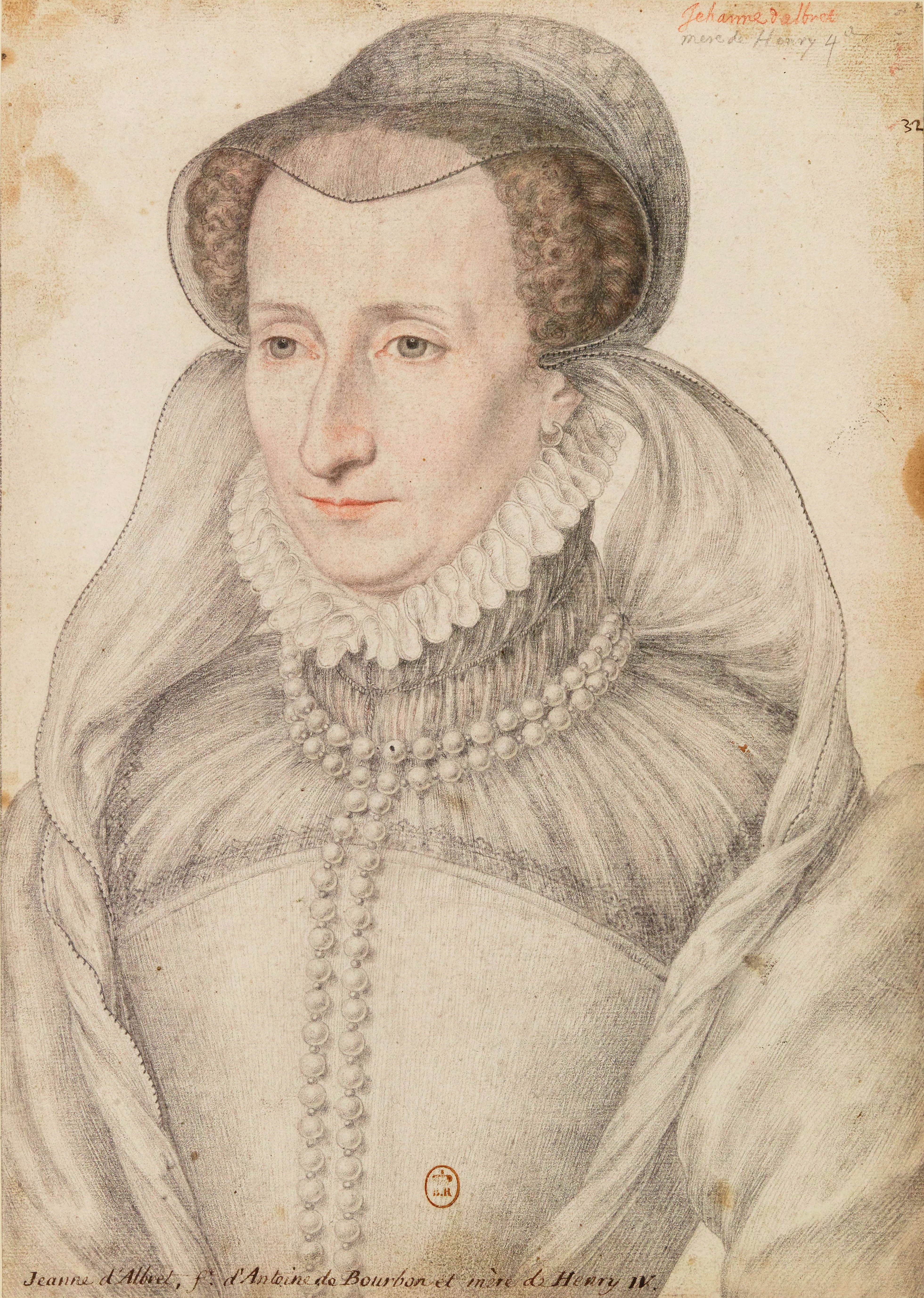
Today's Princess: Jeanne III of Navarre

Workshop of François Clouet via Wikimedia Commons
Like the characters in The Godfather, when a Medici sends you a present, you might want to refuse it. So you might not be surprised that when the Italian Catherine de Medici, Queen Mother of France, gave Queen Jeanne III of Navarre (1528-1572) a pair of scented gloves: Jeanne died soon afterward. The gloves had been skillfully poisoned or so the old fable goes.

While Jeanne actually died of natural causes, Catherine was not unhappy about her passing. The two had been locked in a deadly religious dispute--that erupted into three wars--for many years. As the reigning Queen of Navarre, Jeanne wielded a lot of influence and power. When she converted to Calvinism in 1560, she set herself up as a leader in the Huguenot, or French Protestant, movement, in direct opposition to Catherine, who as Regent of France for three of her sons in a row, championed the Catholic cause. In a century known for female rulers (Mary I and Elizabeth I in England and their cousin Mary Queen of Scots, for instance), Catherine and Jeanne dominated the political landscape on the continent. For Catherine, Jeanne was a problem.

But, she always had been. When she was just 12, she refused to marry Anne of Cleves brother. She was beaten into submission, but ultimately got her way when the marriage was annulled four years later because it was never consummated. Instead, she married Prince Antoine de Bourbon. She loved him passionately, despite his philandering ways. Together, the had five children although only two survived to adulthood.

Her loving marriage, however, was also torn apart by religion. Antoine had shared her Protestant sympathies but ultimately decided to remain loyal to the French crown and remain Catholic. When she fled Paris to return to Navarre, he attempted to have her captured and imprisoned (she had not prevented the Huguenots from violently sacking one of his towns), but she evaded the attempt. Nevertheless, she tried to return to Antoine when he was wounded in the siege of Rouen later that year. He died before she could reach him.

So she carried on in the religious wars, never wavering in her Calvinist beliefs. By 1570, she helped prepare the Peace of St. Germain-en-Laye, which ended the most recent war and granted more rights to Protestants in France. It also included a marriage between Jeanne's son Henry and Catherine's daughter Marguerite. Alas, Jeanne did not live to see the wedding. She died of turbuculosis (not poisoned gloves) shortly before.

The peace did not last long. In the St. Bartholomew's Day Massacre, which followed the wedding, numerous Protestants were killed and even Henry barely escaped. Twenty years later, it was Henry who ultimately ended the religious wars but he did it in a way his mother would not have approved: he converted to Catholicism, famously saying, "Paris is worth a mass." His mother, however, would have been proud of his next move: he issued the Edict of Nantes declaring religious tolerance for Protestants.

For more about Jeanne, I recommend the following articles, both of which I consulted for this post:
Jeanne d'Albret - Jeanne of Navarre on About.com's Women's History
Jeanne d'Albret's Penalities on Christianity.com